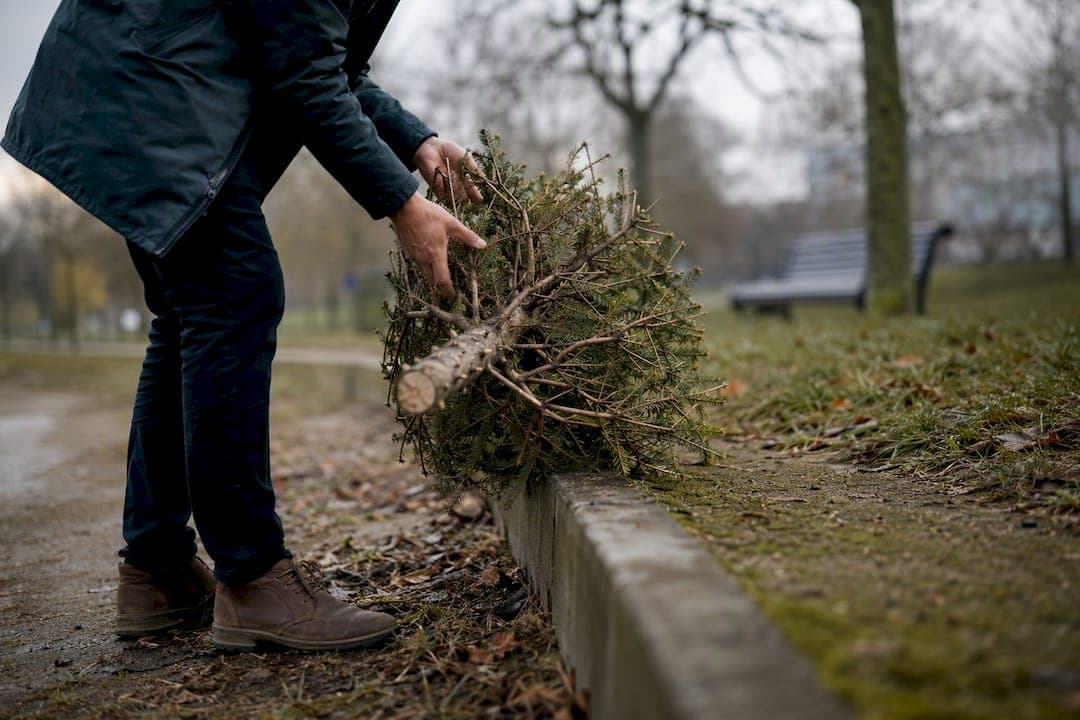
The quickest legal way to get rid of a real Christmas tree is one of three routes: your council's garden-waste or special kerbside collection, a drop-off at the local recycling centre, or a charity doorstep collection (usually for a small donation). Before any of these, strip off the decorations, tinsel and stand. Then check the Recycle Now postcode lookup or your council's website for exact dates, since arrangements differ from one borough to the next.
Here's the short version if you want to act now:
- Kerbside collection: council garden-waste subscribers often get their tree taken free or as part of a scheduled special collection in early January.
- HWRC drop-off: take it to the tip yourself if you have a car and don't want to wait for a collection date.
- Charity or paid collection: book a doorstep pickup, usually for £10 to £20, or use a verified private carrier if your council doesn't collect trees at all.
Whichever route you choose, don't leave it until the last minute. Councils and charities both run these services on tight, published windows.
Key Takeaways
Getting rid of a real Christmas tree legally in the UK means stripping it bare and using one of three routes: council collection, an HWRC drop-off, or a charity or paid pickup, checked against your local postcode dates first.
| Point | Details |
|---|---|
| Check your postcode first | Use the Recycle Now lookup since collection dates and rules vary by council. |
| Strip the tree before collection | Remove decorations, tinsel, stands and any hidden wire before it goes anywhere. |
| Watch the January deadline | Most council special collections and charity sign-ups close within the first two to three weeks of January. |
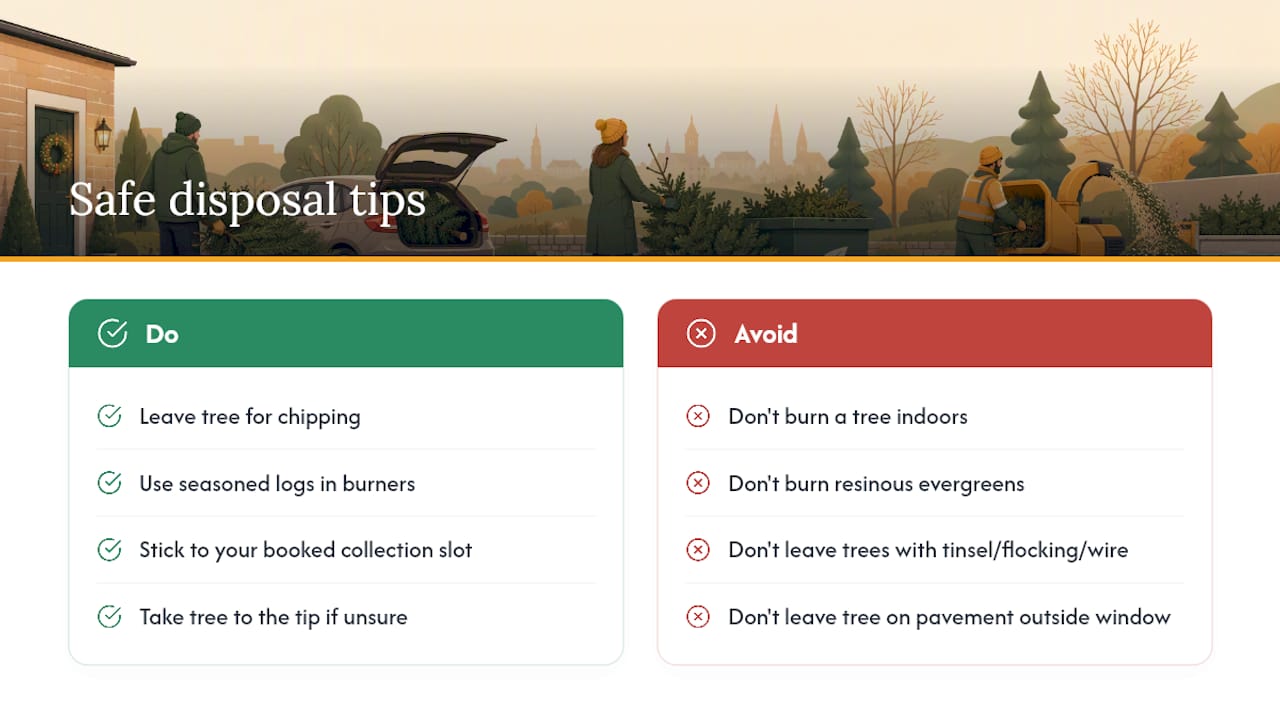
| Never burn it indoors | Resinous trees build up creosote rapidly and raise the risk of a chimney fire. |
| Use Binshare when the usual routes fail | Book a verified carrier for a duty-of-care collection when there's no kerbside service or you've missed the window. |
Table of Contents
- How do councils dispose of Christmas trees?
- What happens at recycling centres and drop-off points?
- Can a charity collect my Christmas tree?
- What do recycled Christmas trees become?
- How do I prepare my tree for collection?
- When should I get rid of my Christmas tree?
- Is it safe to burn or bin a Christmas tree?
- How does Binshare offer a verified alternative?
- A local view on getting this right
- Book a verified Christmas tree collection with Binshare
- Where to check official rules and dates
- Sources
How do councils dispose of Christmas trees?
Most councils fold Christmas tree collection into one of two systems: your existing garden-waste subscription, or a one-off special collection laid on specifically for the post-Christmas glut. Some run both, some run neither and expect you to use a recycling centre instead. There's genuinely no single UK-wide rule here, which is exactly why checking your own council's page matters more than following generic advice.
If you already pay for a garden-waste bin, your tree usually goes in with the rest of your green waste on your normal collection day, sometimes with a size limit on what fits in or beside the bin. If you don't subscribe, look for a special one-off collection: many councils run these in the first two weeks of January, either free or for a small fee, and they typically want the tree left at the kerb rather than in the garden-waste bin itself.
A handful of boroughs also offer marked drop-off points, temporary bins in car parks or supermarket sites, that disappear again by mid-January. London Recycles is a good example of a local network publishing exactly this kind of borough-specific detail, including the rule that trees must be free of decorations and cut down if they're too tall for the crew to handle.
Here's how to work out what applies to you:
- Check whether you already have a garden-waste subscription and whether your council includes trees in it automatically.
- If not, search your council's website for "Christmas tree collection" or a similarly named one-off service.
- Use the Recycle Now postcode tool to confirm the nearest recycling point if kerbside isn't an option.
- Note the cut-off date. Most schemes stop taking trees by mid-January and won't resume until the following year.
Councils regularly pause garden-waste collections over the festive fortnight itself and restart in the first week of January, which catches out people who assume services run as normal right through the break.
Pro Tip: Screenshot your council's Christmas collection page as soon as you find it. These pages often get replaced with the next year's version by late January, and you'll want the exact date on hand if your tree gets missed on the first pass.
What happens at recycling centres and drop-off points?
Household Waste Recycling Centres, the tip, in plainer English, take real Christmas trees as a matter of course, and this is often the fastest route if you have a car and don't fancy waiting for a scheduled collection. Trees dropped at an HWRC are usually chipped or composted on site rather than sent to landfill, which is precisely the outcome councils are trying to encourage.
A few practical things catch people out:
- Some centres now require a booked slot, particularly since permit systems became common after the pandemic, so check before you drive over.
- You may need to show proof of address or a permit if you're bringing waste in a van rather than a car, since HWRCs are designed for householders, not commercial loads.
- There's sometimes a small charge for non-residents using a neighbouring authority's site, so stick to your own council's centre where possible.
- Most sites want the tree loose, not bagged in plastic, so it goes straight into the chipping stream without anyone having to unwrap it first.
Before you load the tree into the car, knock off loose soil and secure it so it doesn't shed needles across your boot the whole way there. If it's still in a pot, that's a separate consideration, covered in the reuse section below, since a live root ball is worth more to you in the garden than on a chip pile.
Drop-off points are particularly useful if you've got more than one tree, say you run a small guesthouse or B&B, since kerbside collections often cap how many they'll take per household.
Can a charity collect my Christmas tree?
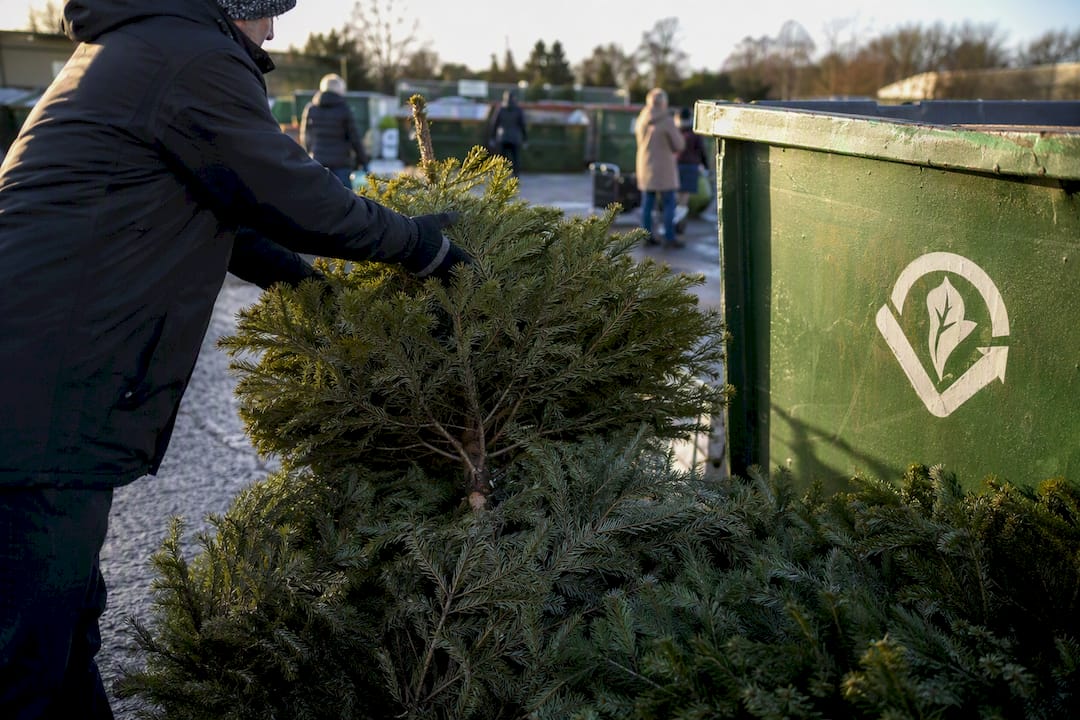
Charity doorstep collections are one of the most convenient options going, and they raise money for good causes at the same time. The model is simple: you register online by an early January cut off, leave the tree out on the agreed morning, and pay a suggested donation, commonly in the £10 to £20 range, when the collector arrives or online in advance.
What actually happens to your tree:
- Collected trees are typically chipped, composted, or occasionally used for biomass energy, the same broad outcomes as council recycling.
- Legitimate schemes are run by registered charities or established community groups covering specific postcodes, so check who's actually organising the collection near you rather than assuming any flyer through your door is genuine.
- Doorstep charity collections are worth the modest donation if convenience and supporting a local cause both matter to you.
- Private paid collection services exist too, and these can be the only realistic option if your council doesn't offer kerbside collection and you can't get to an HWRC. Just check the carrier is properly licensed and ask for a duty-of-care receipt confirming lawful disposal, exactly the kind of paperwork Binshare generates automatically for every booking made through the app.
What do recycled Christmas trees become?
Between six and eight million real trees are sold in the UK every year, and trees that end up in landfill rather than recycling cost the public roughly £22 million in landfill-related expenses. That's the entire case for recycling in one number: it isn't really about the individual tree, it's about what happens when millions of households make the same choice at once.
Chipped trees mostly become woodchip for park paths and play areas, or mulch and compost that councils sometimes make available for residents to collect themselves, worth asking about if you garden. Not every tree qualifies, though:
- Flocked trees (the ones sprayed with artificial snow) are usually rejected because the coating contaminates the chipping process.
- Trees left with decorations, wire or tinsel still attached get turned away at most sites for the same reason.
- Artificial trees aren't recyclable through these streams at all since they're made of mixed plastics and metal; Recycle Now recommends donating a reusable fake tree to a charity shop instead.
If you'd rather skip the chipper altogether, a potted tree can go straight back in the garden, and a bare, undecorated tree left in a corner of the garden or hedgerow over winter makes decent shelter for birds and insects until spring.
How do I prepare my tree for collection?
Getting a tree accepted comes down to a short list of things done in the right order:
- Strip everything off first. Lights, baubles, tinsel, and the stand all need to come off, and check any wreaths or wire ties for hidden wire that shouldn't go into a chipper.
- Cut oversized trees down. If your council specifies a maximum length, generally around 1.5 to 2 metres, saw the trunk to size rather than leaving crews to deal with an awkward six footer.
- Handle potted trees separately. If it's still got roots and you want to keep it, replant it in the garden or a larger pot straight after Christmas while it's dormant. If you're getting rid of it, most councils still take it, but check whether soil and pot need removing first.
None of this takes more than ten minutes, and it's the difference between a crew taking your tree on the first pass or leaving it on the kerb with a rejection sticker.
When should I get rid of my Christmas tree?
Timing trips more people up than any other part of this process. Garden-waste collections routinely pause over the festive period itself and pick back up in the first week of January, so a tree left at the kerb on 27 December might sit there for over a week before anyone comes.
- Council special collections typically run in the first two to three weeks of January, with a firm cut-off after which you'll need to wait for the next normal cycle or use an HWRC instead.
- Charity doorstep schemes usually close registration in the first days of January, so sign up as soon as the tree comes down rather than waiting for a quiet weekend.
- Private paid collections tend to have more flexibility and often run bookings right through January.
- HWRC drop-off has no real deadline beyond the centre's normal opening hours, making it the fallback if you've missed every other window.
Check your own council's Christmas and New Year service page the moment you take the tree down. Dates shift year to year, and last year's page is no guide to this one.
Is it safe to burn or bin a Christmas tree?
Burning a real Christmas tree indoors is a genuinely bad idea, not just an old wives' tale. Resinous evergreens burn hot and fast, and they build up creosote in chimneys rapidly, which is a recognised cause of chimney fires. If you've got a wood burner or open fire, leave the tree for chipping and stick to seasoned logs.
Contamination is the other thing to watch. Trees still coated in flocking, still wrapped in tinsel, or still carrying wire ties commonly get rejected at collection points and end up in landfill anyway, undoing the entire point of recycling it. And leaving a tree on the pavement overnight outside an agreed collection window isn't a grey area: it's fly-tipping, and councils do issue fines for it, so stick to your booked slot or take it to the tip yourself if you're not sure the date's confirmed.
Pro Tip: If in doubt about a collection date, don't gamble on leaving the tree out anyway. A missed collection sitting on the pavement for a week is both a fine risk and an eyesore your neighbours will remember next December.
How does Binshare offer a verified alternative?
If your council doesn't run kerbside collection, you've missed the charity sign-up window, or you simply can't get to an HWRC, Binshare gives you a lawful, verified route that doesn't depend on hitting someone else's calendar.
- Snap a photo of the tree in the app and post it for collection.
- Licensed carriers bid on the job, so you're comparing real, verified options rather than calling round for quotes.
- Book the winning bid and pay securely through the app once the tree's collected.
- You get a digital duty-of-care receipt confirming the waste was handled legally, useful if you ever need to show proof of lawful disposal.
It's particularly worth it if you're mobility limited, don't drive, or just want the tree gone on your schedule rather than the council's.
A local view on getting this right
Every January, the same pattern repeats: perfectly good trees end up dumped on pavements or shoved into general waste bins because someone missed a collection date by two days. That's not laziness, it's a system where every council runs a slightly different service with almost no consistent national messaging.
The fix isn't complicated. Check dates early, strip the tree properly, and pick whichever of the three main routes actually fits your circumstances rather than whichever one you vaguely remember from last year. Trees that get contaminated with tinsel or flocking and rejected at the last step are the ones that genuinely waste the recycling effort, not the ones that go out a day late.
Book a verified Christmas tree collection with Binshare
Binshare is the alternative to waiting on a council calendar: if your area has no garden-waste collection, the charity sign-up date has already passed, or you just want the tree gone this weekend, you can book a verified carrier on your own timeline instead.
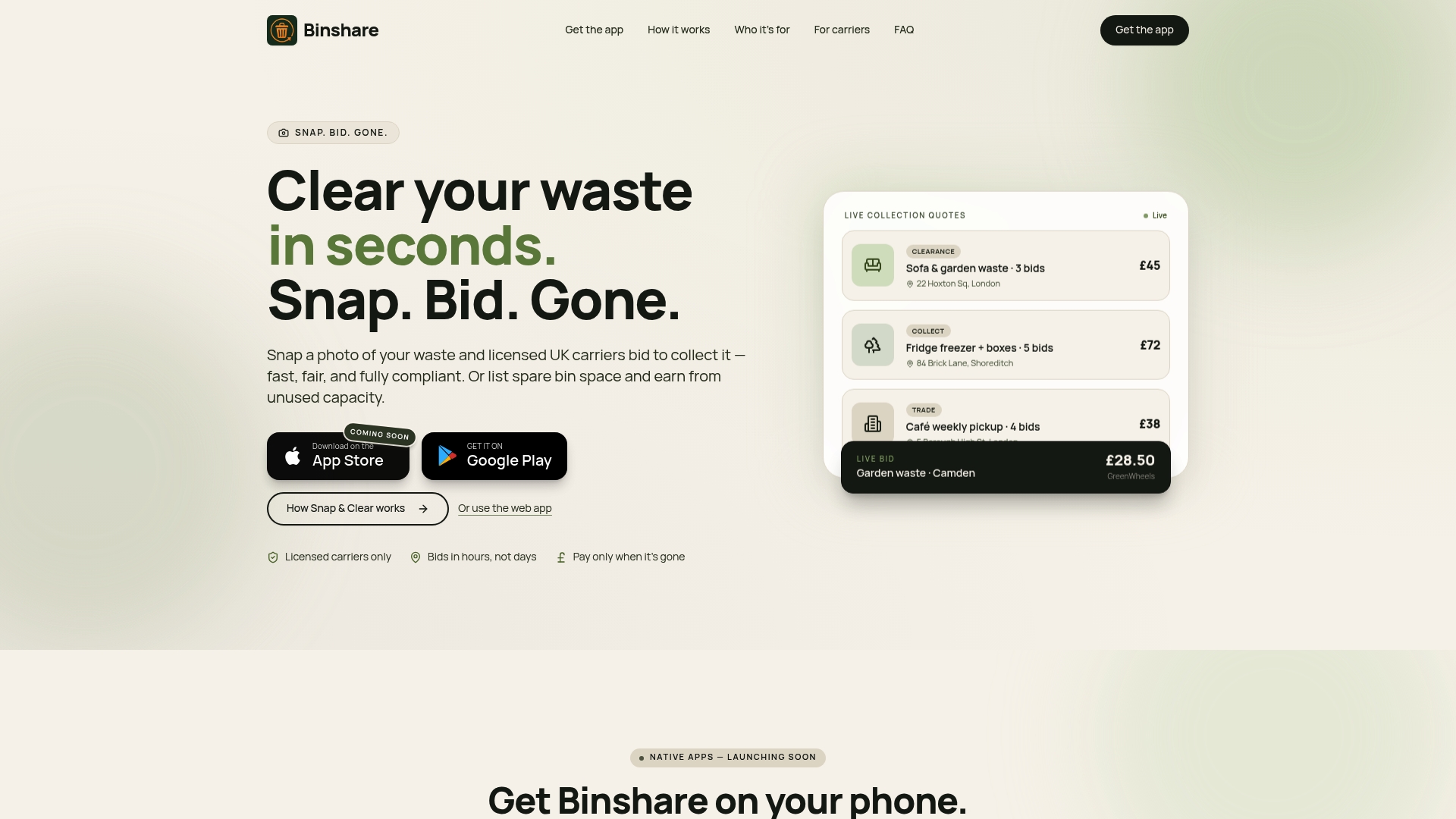
The process takes minutes. Photograph the tree, post it on the app, and licensed carriers bid to collect it. Every carrier is verified against Environment Agency compliance standards, and you get a digital duty-of-care receipt once the job's done, proof the tree was disposed of legally, not dumped. It's a straightforward option when the usual council or charity routes don't line up with your schedule. Head to Binshare to post your tree and see what carriers in your area are bidding.
Where to check official rules and dates
Your council's own Christmas and New Year service page is the single most reliable source for exact dates and any changes to the usual routine. Beyond that, three resources cover almost everything else you'll need:
- Gov for the national picture and the environmental case for recycling.
- The BBC's guide to recycling a real Christmas tree for a practical rundown of charity and council options.