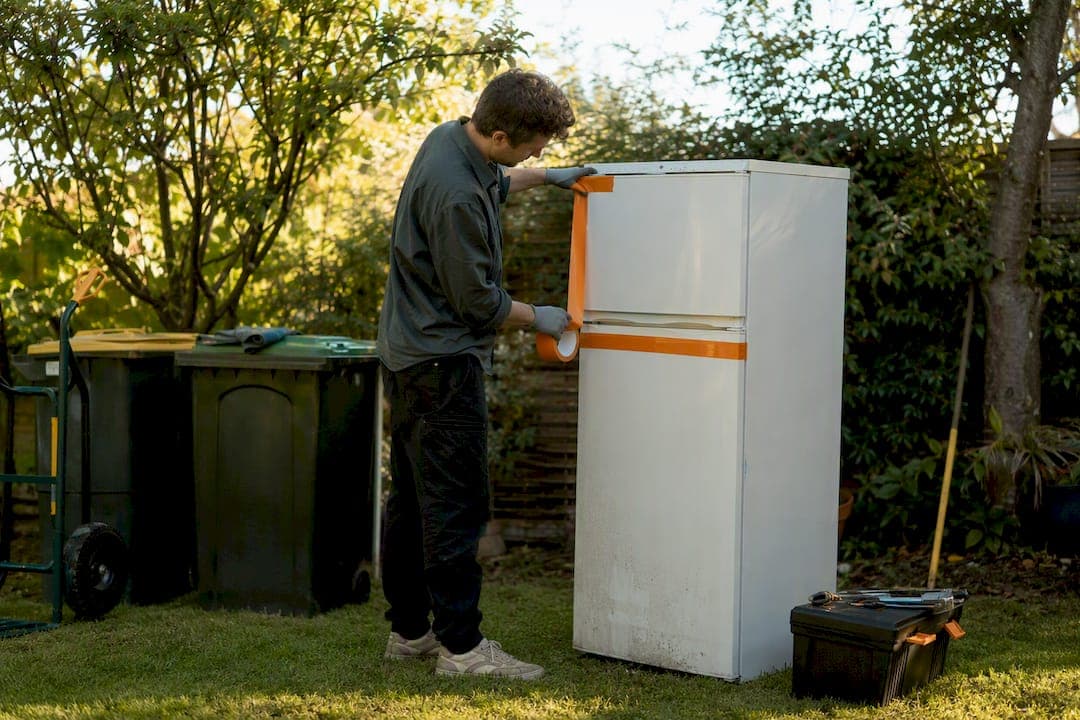
The fastest, legal way to get rid of an old fridge freezer is one of four routes: retailer take-back under WEEE rules when you buy a new one, your council's bulky-waste service or a Household Waste Recycling Centre (HWRC), donation to a charity if it still works, or a licensed waste carrier booked through a marketplace such as Binshare. Working units should go to charity or back to the retailer, often for free. Broken units usually need the council, an HWRC, or a licensed carrier.
Every route must end with an authorised treatment facility, because fridges hold refrigerants that can't legally go in general waste.
- Working fridge or freezer: donate it, or hand it back to the retailer delivering your replacement.
- Broken appliance, no rush: book an HWRC drop-off or council bulky collection.
- Broken appliance, need it gone fast or your council has paused collections: use a licensed carrier via a marketplace.
Retailers must offer one-for-one, like-for-like take-back within 28 days under WEEE. Council fees vary widely: a 2021 survey of London boroughs found bulky collection charges ranging from roughly £15 to over £60 per item.
Key Takeaways
Choosing the right disposal route comes down to one factor: whether the appliance still works, and whether your council can actually collect it.
| Point | Details |
|---|---|
| Check condition first | Working units go to charity or retailer take-back; broken units need council, HWRC, or a carrier. |
| Retailer take-back is fast | WEEE rules require one-for-one collection within 28 days of a new delivery. |
| Council fees vary sharply | London boroughs charged roughly £15 to over £60 per item in a 2021 survey. |
| Some councils have paused collections | Capacity pressure has led some authorities to suspend fridge pickups, so check local notices first. |
| Binshare covers the gap | Verified carriers, digital duty-of-care receipts, and fast bidding make it a reliable paid option when other routes stall. |
Table of Contents
- Why a licensed carrier marketplace makes sense right now
- How Binshare gets your old fridge freezer collected properly
- Sources
Why a licensed carrier marketplace makes sense right now
Binshare exists because the traditional routes aren't always dependable. We connect homeowners with verified, Environment Agency compliant carriers, and every job comes with a digital duty-of-care receipt as proof your fridge went to an authorised facility, not a lay-by.
That matters more than it used to. Storage capacity at treatment plants has strained the system, and some councils have paused fridge collections altogether. When your council notice says "temporarily suspended," a verified carrier is often the only compliant option left.
How Binshare gets your old fridge freezer collected properly
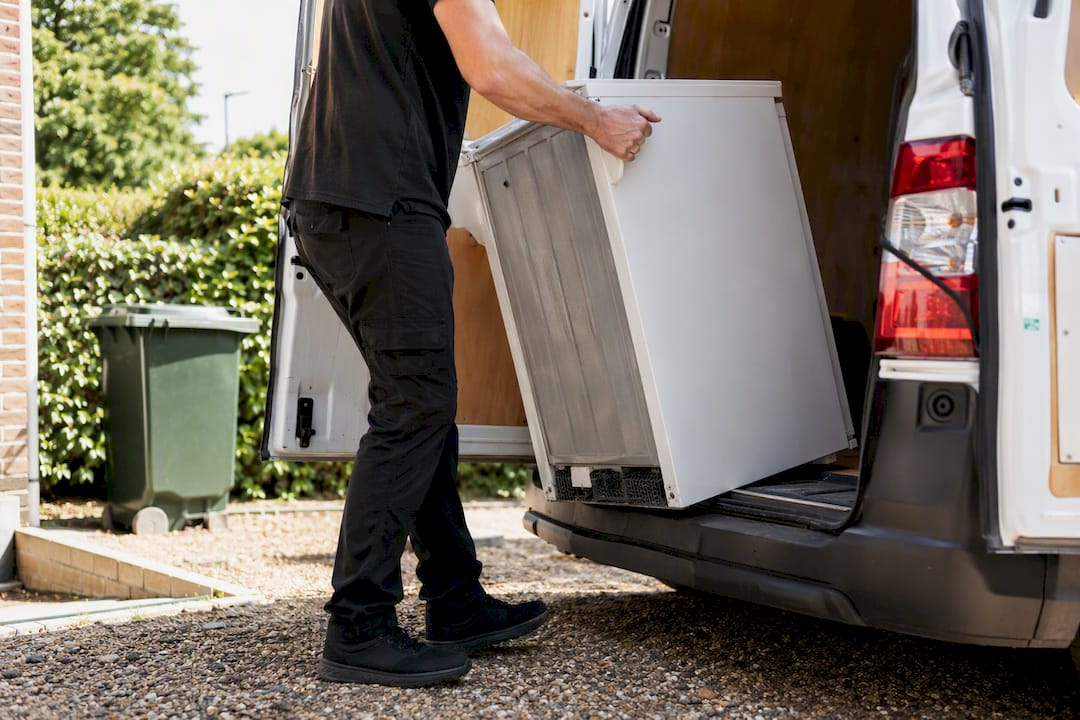
Skip the guesswork of finding a carrier yourself. On Binshare, you photograph the appliance, get competitive bids from verified carriers within minutes, and pay securely once it's collected. No cash in hand, no chasing paperwork afterwards.
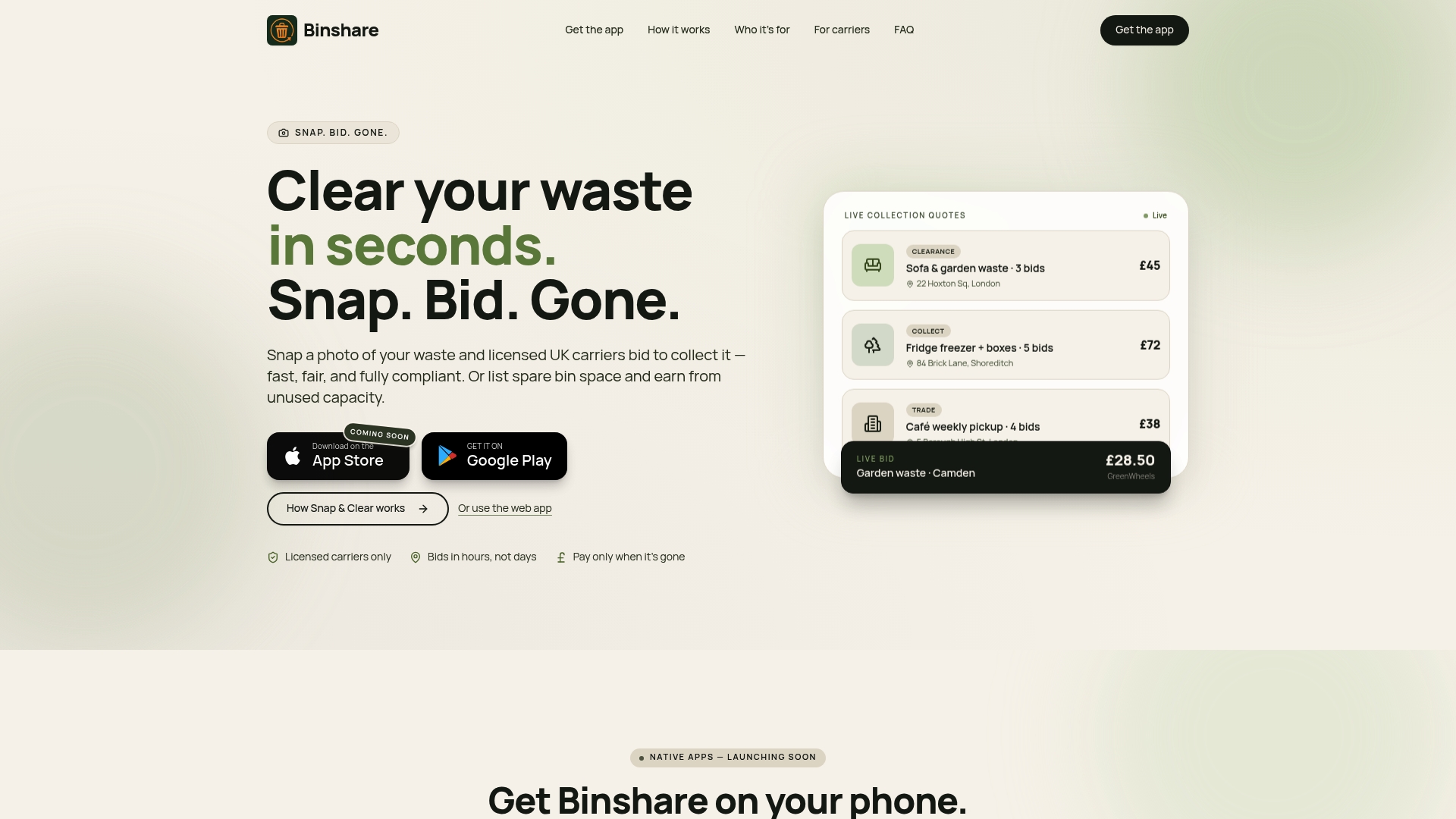
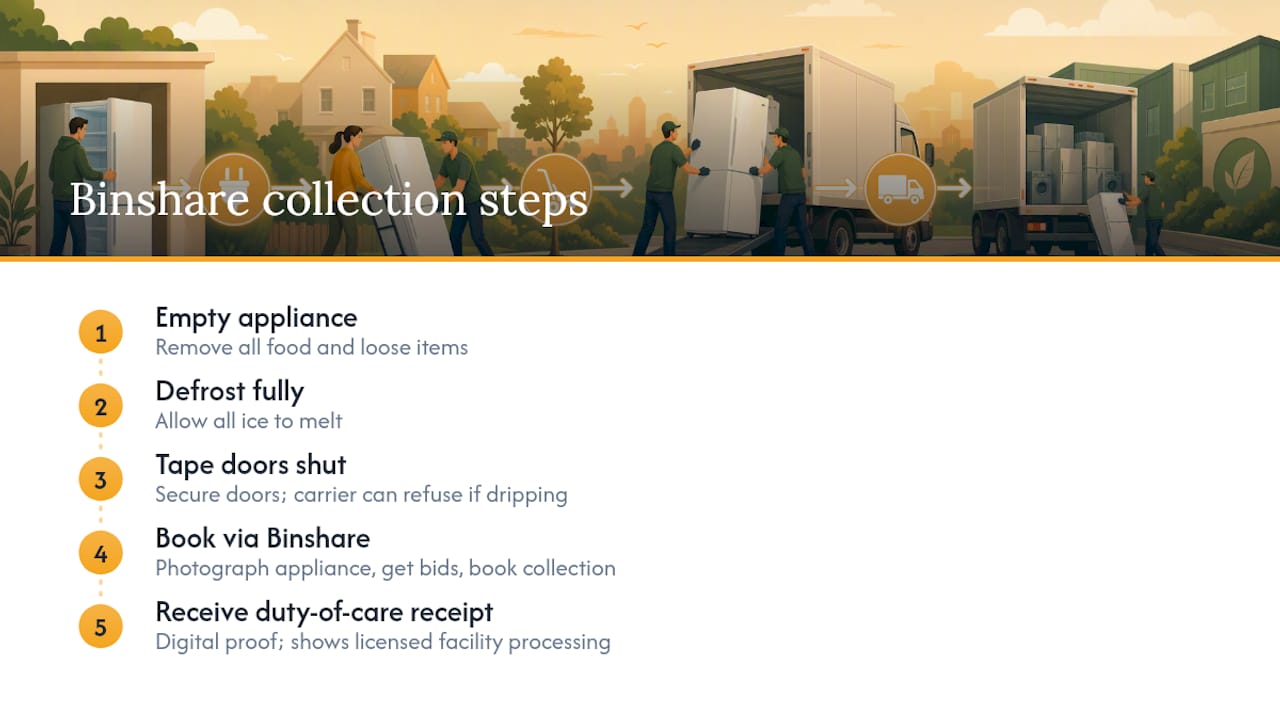
Every job includes a digital duty-of-care receipt, your proof the fridge was handled legally and processed at a licensed treatment facility, not dumped or left to a cowboy operator. That receipt is worth keeping. Fly-tipping a fridge or leaving it on the pavement can carry a £500 fine, and responsibility for illegal disposal can trace back to whoever last owned the appliance.
Binshare works best when you need speed, when your council has suspended fridge collections, or when you simply want price transparency instead of ringing round for quotes. Before booking, empty the fridge, defrost it fully, and tape or secure the doors shut; carriers can refuse a job if it turns up dripping or unsecured.
If you're replacing rather than just clearing space, check whether your retailer's take-back applies first. If not, book a licensed carrier through Binshare and get it off your hands within days, not weeks.