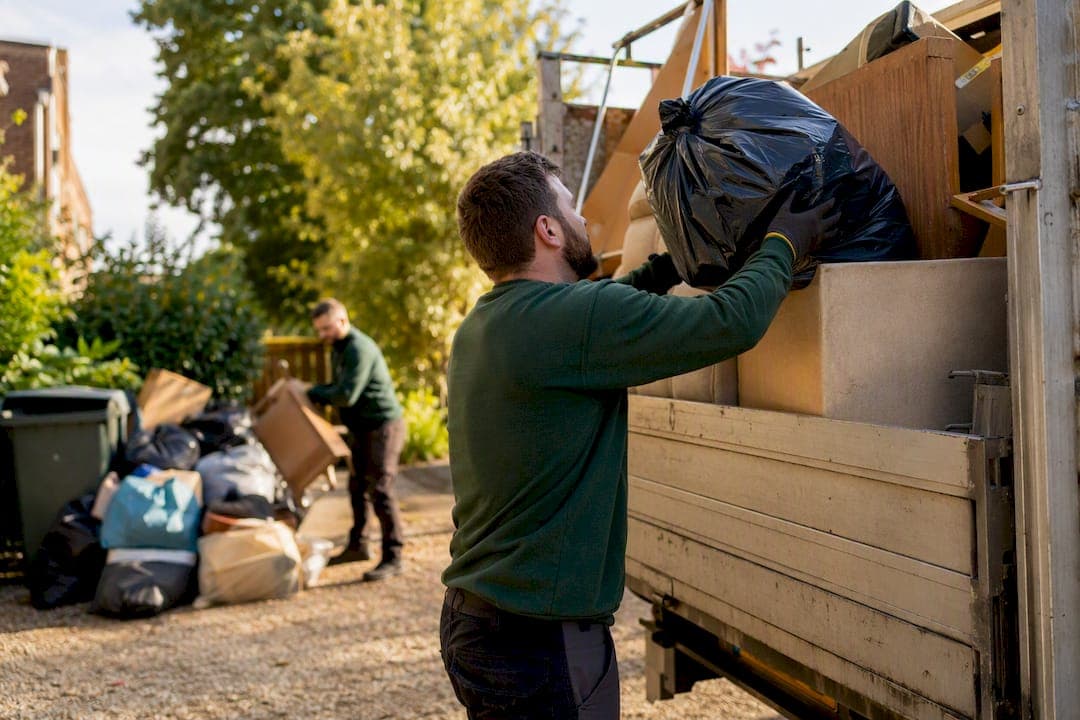
Most UK house clearances cost between £250 and £1,800, with a typical two-to-three-bed home landing near £700. Volume is the biggest driver, followed by access, then the number of heavy or specialist items that need extra disposal.
- Extra small job (single room, garage): from around £175
- Small clearance (half a van): from around £325
- Medium clearance (full van): starting at a moderate price
- Large or probate clearance (multiple loads): starting at a higher price
Pro Tip: Before you accept any quote, ask for it itemised and check the carrier's Environment Agency registration on the public register. It costs nothing and takes two minutes, and it protects you from liability if waste is dumped illegally.
Your fastest route to a fair price is either a written itemised quote from a local firm or competitive bids through a marketplace like Binshare, where verified carriers price the job from photos.
Key Takeaways
House clearance cost in the UK depends primarily on volume and access, with typical jobs ranging from £175 for a single room to £1,800 for a large or probate property.
| Point | Details |
|---|---|
| Typical price band | Most full clearances cost £250 to £1,800, with £700 as a fair benchmark for a two-to-three-bed home. |
| Access beats size | Stairs, parking, and carry distance affect price more than square footage does. |
| Watch for surcharges | Fridges, pianos, mattresses, and hazardous waste all carry separate fees on top of the base quote. |
| Verify before you book | Check the carrier's Environment Agency registration and get a duty-of-care receipt. |
| Compare bids for speed | Platforms like Binshare let verified carriers bid on photo-based jobs, speeding up comparison and confirming compliance. |
Table of Contents
- House clearance cost by property size and van load
- How clearance firms price the job (and the extras that catch people out)
- What actually pushes your quote up or down
- How long a clearance actually takes
- Ways to bring the cost down without cutting corners
- Getting a quote you can actually trust and compare
- Probate and estate clearances need their own approach
- Why paying for a verified carrier usually beats the DIY route
- Get verified bids for your house clearance through Binshare
- Sources
House clearance cost by property size and van load
Clearance firms rarely quote by square footage. They quote by how much stuff has to move and how many van trips that takes, which is why a hoarded one-bed flat can cost more than a tidy three-bed semi.
The Checkatrade cost guide sets out the bands most UK firms still use as a baseline:
- Extra small load (a few bags, single room): from around £175
- Small load (roughly half a van, studio or one-bed flat): from around £325
- Medium load (full van, typical two-bed): from around £400
- Large load or multiple vans (three-bed, four-bed, probate house): from £595 and climbing depending on volume
A full house clearance nationally ranges from about £250 to £1,800, and the figure that comes up again and again for a standard two-to-three-bed property sits close to £700. That number assumes reasonable access and a mix of ordinary household items rather than anything requiring specialist handling.
Region changes the maths noticeably. London and the South East typically cost more than the North, Wales, or Scotland due to higher labour and tip fees.
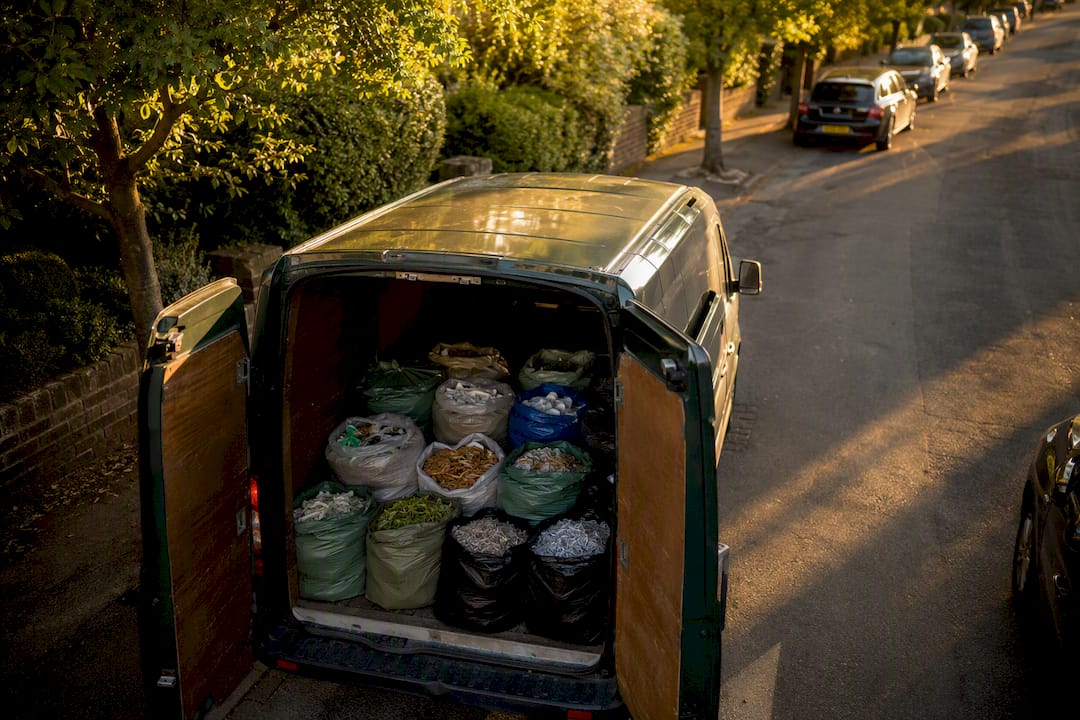
Worked example one: a three-bed semi in Leeds with ground-floor access, a driveway, and standard furniture clears for roughly £450 to £600. Worked example two: the same size house in Ealing, up a flight of stairs with no parking outside, could push past £900 once the crew factors in extra time and a longer carry to the van. Same property size, very different price, because access did the damage.
How clearance firms price the job (and the extras that catch people out)
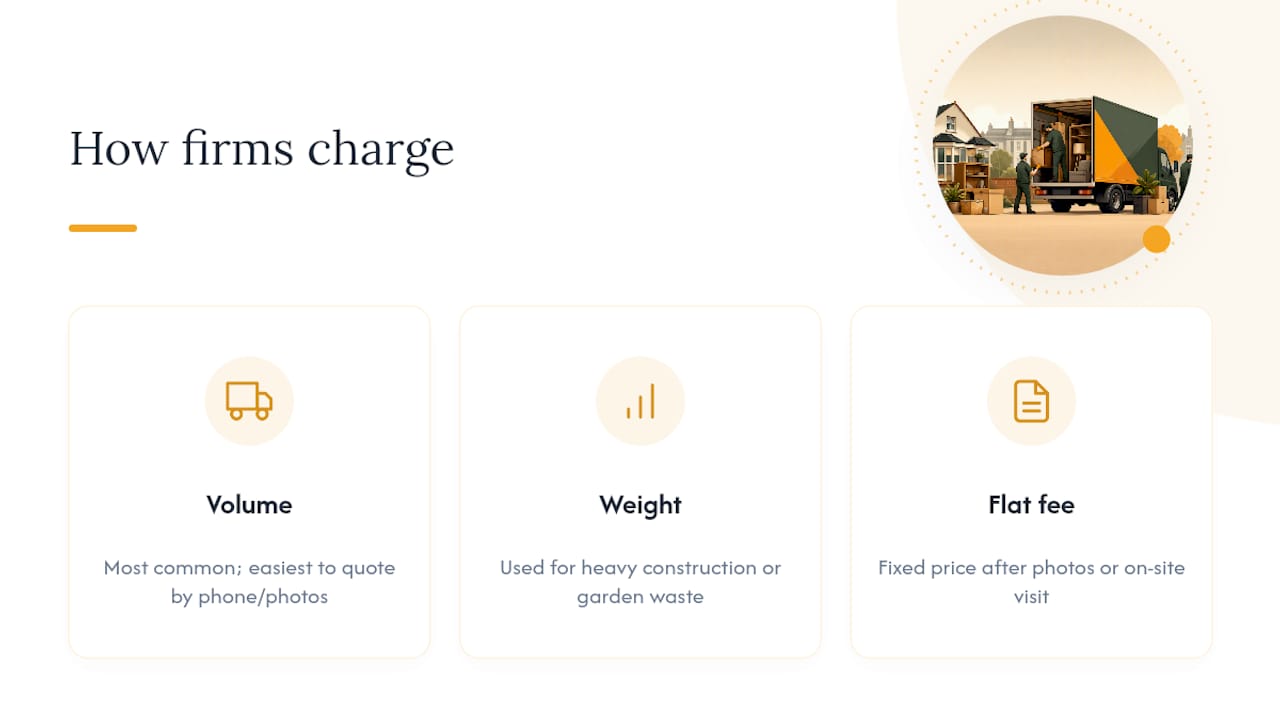
Three charging models dominate the UK market. Most independent firms price by volume or van-load, some price by weight when the job involves heavy construction debris or garden waste, and a handful offer a flat fee once they have seen photos or visited in person. Volume pricing is the most common because it is the easiest to quote accurately from a phone call or a set of photos.
A standard quote usually includes labour, loading, transport, and basic recycling or waste transfer. What it usually does not include are items that need separate, licensed disposal:
These figures come from Checkatrade's 2026 cost guide, and the pattern is consistent across most quotes: anything containing refrigerant gas, anything with strings and a wooden case weighing 200kg, and anything flagged as hazardous gets its own line item.
Fridges and freezers cost extra because they need degassing under WEEE regulations before they can be scrapped. Asbestos, if found in an older property's ceiling tiles or garage roofing, needs a licensed specialist contractor rather than a general clearance crew, and that alone can add several hundred pounds depending on the quantity and where it is located in the house.
What actually pushes your quote up or down
Two houses the same size can generate wildly different quotes, and it usually comes down to five things.
- Volume: more van loads means more labour hours and more tip fees, plain and simple.
- Access: stairs, narrow hallways, no parking near the property, or a long carry to the van all add time, and time is what you're paying for.
- Heavy or awkward items: wardrobes that need dismantling, upright pianos, gym equipment, and anything requiring two or three people to lift.
- Disposal complexity: hazardous materials, old paint tins, garden chemicals, or construction rubble from a recent renovation all need separate handling routes.
- Region: crews in London and the South East charge more per hour than crews in most of the North or Wales, and tip fees vary by council area too.
Hoarded properties deserve a special mention. A firm quoting from photos alone can underestimate a genuinely packed house, because access problems are the single most common thing missed in photo-based quotes.
Pro Tip: If your property has restricted parking or stairs with no lift, say so explicitly when you request quotes. A firm that knows about access issues upfront will price accurately the first time, instead of adjusting the bill on the day.
How long a clearance actually takes
A single room or garage clearance usually wraps up in two to three hours with a two-person crew. A standard one or two-bed property typically takes half a day. A three-bed house with a reasonable amount of furniture runs a full day, and a four-bed or genuinely hoarded property can stretch into a second day, particularly if there's a skip to fill and empty more than once.
- Crew size matters as much as house size. Two people clear a one-bed flat in half a day; the same job with four people might take two hours, but you pay for more labour hours upfront, so the total cost often ends up similar.
- Lead time affects price. Booking a week or two ahead usually gets you standard rates; asking for next-day or same-week collection often carries a premium, especially in busier regions.
- Multi-day jobs need planning. If a property needs two visits, agree in advance whether that's included in the quote or charged as a separate call-out, because this is where budgets quietly overrun.
Sorting obvious rubbish, valuables, and items for donation before the crew arrives shortens the job and can shave a genuine amount off the final bill, since less on-site decision-making means faster loading.
Ways to bring the cost down without cutting corners
Skip hire looks cheaper on paper, at £90 to £380 depending on size, but you do all the loading yourself and may need a council permit if it sits on the road. For a large job, that's a full weekend of heavy lifting most people underestimate.
- Sell or donate before you clear. Furniture, electricals, and collectables in decent condition often have resale value, and a good clearance firm will credit that against your bill rather than binning it.
- Ask providers to itemise saleable value. Potteries Auctions advises requesting a quote that shows what's being sold or donated, so those proceeds genuinely offset your cost rather than disappearing into the provider's margin.
- Factor in the hidden costs of DIY removal. Van hire, fuel, council tip charges for non-household waste, and your own time add up quickly, and most people clear a house far slower than a trained crew.
- Favour a professional clearance for large or awkward jobs. Once you're moving a full house, particularly with heavy furniture or hazardous items, the headline saving from doing it yourself rarely survives contact with the actual labour involved.
Getting a quote you can actually trust and compare
Comparable quotes depend on giving every firm the same information, so ask for exactly this from each one you contact.
- Send clear photos of every room, plus a rough van-load estimate and your postcode, so pricing reflects the real job rather than a guess.
- Flag access issues explicitly: stairs, lifts, parking restrictions, and distance from the front door to where a van can park.
- Request a written, itemised quote that lists any extra-item surcharges separately, rather than a single vague total.
- Check the firm's Environment Agency waste carrier registration number on the public register before booking, and ask for a duty-of-care waste transfer receipt after collection.
- Ask whether resale or recycling income gets credited against your final bill, since some firms sell on usable furniture and electricals rather than landfilling them.
Pro Tip: Get at least three quotes for anything beyond a single-room clearance. Prices for the same job commonly vary by £150 to £200 between firms, purely based on how busy they are and how they value their time.
Probate and estate clearances need their own approach
Executors clearing a deceased relative's home face a different job to a standard house move. An itemised inventory matters here in a way it doesn't for a routine clearance, because it supports the legal probate process and documents exactly what left the property, which protects the executor if a beneficiary later questions what happened to specific items.
- Ask for a full written inventory before anything is removed, particularly for jewellery, antiques, or anything of uncertain value.
- Saleable items, from furniture to collectables, can be routed through an auctioneer and the proceeds credited against the clearance bill.
- Build in extra time for valuation, since rushing a probate clearance risks selling something worth far more than its clearance-day price.
- For a house with genuinely valuable contents, involve a specialist probate clearance service or auctioneer rather than a general firm.
Why paying for a verified carrier usually beats the DIY route
Most people overestimate how much they'll save doing it themselves and underestimate how much a botched clearance can cost in wasted weekends, tip runs, and the risk of using an unregistered carrier. A verified provider with a proper waste carrier registration removes that risk entirely, and for anything beyond a single room, the time saved is worth more than the headline difference on a quote.
Where marketplace bidding genuinely helps is speed and comparison. Instead of ringing round five local firms and waiting for callbacks, a photo-based bidding system lets several verified carriers compete for the job at once, which tends to sharpen pricing and shortens the whole process to a day or two.
Get verified bids for your house clearance through Binshare
Binshare cuts out the guesswork of ringing round local firms one by one. Snap a photo of what needs clearing, and verified UK waste carriers bid competitively for the job, so you see real, comparable prices rather than a single take-it-or-leave-it quote.

Every carrier on the platform is checked against Environment Agency registration before they can bid, and once the job's done you get a digital duty-of-care receipt automatically, which matters for probate work and general peace of mind alike. Payment is handled securely within the app, so there's no cash changing hands or chasing an invoice afterwards. If you've got a bin or skip with spare capacity, you can list it too and offset your own costs by letting others use it. Visit the Binshare landing page to submit photos of your clearance and start receiving bids from verified carriers near you.
Sources
- House clearance cost guide 2026 | Checkatrade
- House clearance cost calculator 2026 | Costwise
- Potteries Auctions — house clearance advice