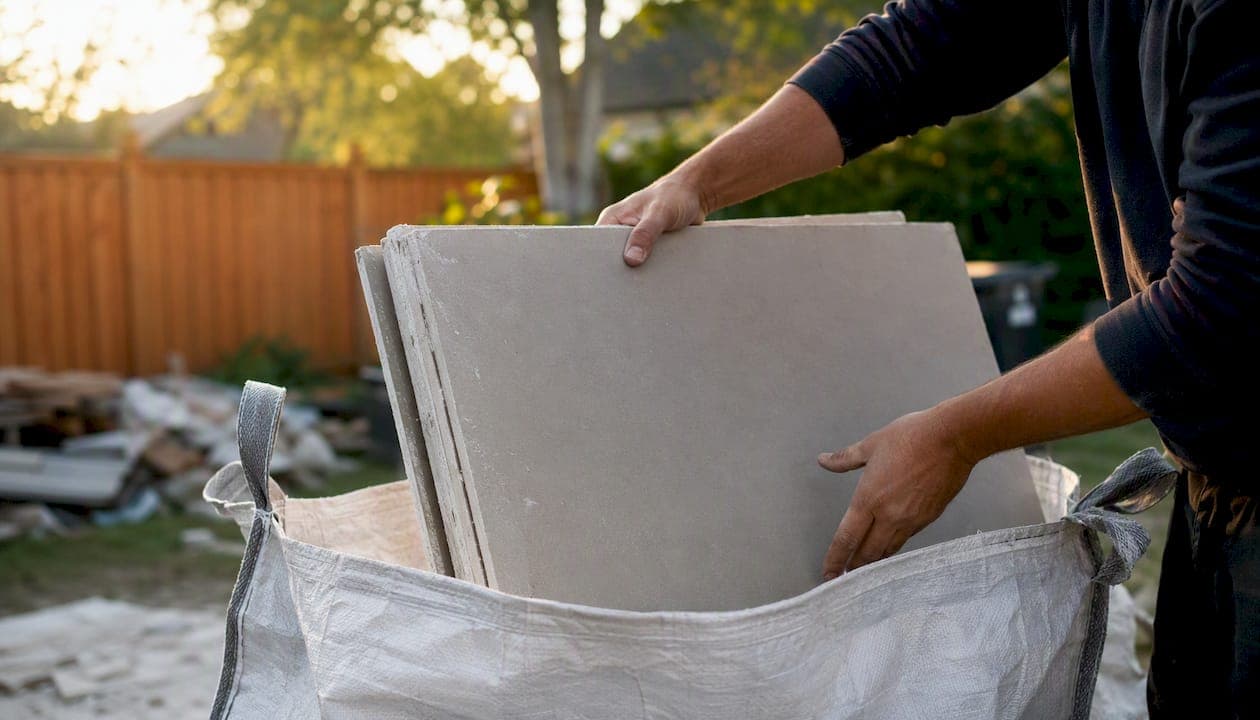
Segregate clean plasterboard and route it to a dedicated recycling scheme — manufacturer takeback, an independent gypsum recycler, or an EA-licensed carrier — and you stay legal, avoid fines, and usually spend less than landfill. The Plasterboard Sustainability Partnership is clear: plasterboard cannot go to general landfill; only a dedicated mono-cell accepts high-sulphate waste, and that route costs roughly £2,000 per skip. Your first action on site is straightforward.
- Separate plasterboard from all other waste immediately — never mix it with timber, rubble, or general skip contents.
- Keep boards dry and remove any tiles, wallpaper, or metal fixings before collection.
- Photograph the load: this creates a visual record for duty-of-care purposes and helps carriers quote accurately.
- Identify your route: manufacturer takeback (British Gypsum, Knauf, Siniat), independent gypsum recycler, or a verified licensed carrier.
Pro Tip: Snap a photo of each bulk bag before it is sealed. If a load is later queried, that image is your fastest proof of what went in.
Key takeaways
Recycling plasterboard via a manufacturer scheme or licensed carrier is cheaper, legally safer, and more straightforward than landfill — segregate early and keep every document.
| Point | Details |
|---|---|
| Segregate immediately | Keep plasterboard separate, dry, and free from contaminants from the moment boards come down. |
| Recycling beats landfill on cost | One skip to landfill costs approximately £2,000; manufacturer schemes can save money on each skip. |
| Legal paperwork is non-negotiable | Keep the waste transfer note, carrier registration, and recycling certificate for a minimum of two years. |
| Small quantities: check your HWRC | Local HWRCs often charge around £100 per tonne but are cheaper than skip hire for a few sheets. |
| Binshare speeds verified bookings | Binshare matches you with EA-licensed carriers, provides digital duty-of-care receipts, and accepts payment after collection. |
Table of Contents
- Why is plasterboard treated differently from other building waste?
- What are the compliant plasterboard disposal routes in the UK?
- How do manufacturer takeback schemes work?
- Can independent recyclers collect plasterboard near you?
- Using EA-licensed carriers, skips, or a marketplace like Binshare
- How to prepare plasterboard on site for collection
- What does plasterboard disposal cost in the UK?
- What paperwork do you need for plasterboard disposal?
- How do you choose the right disposal route?
- Step-by-step workflow for a compliant collection
- What is mono-cell landfill and when is it used?
- A practitioner's note on what actually gets loads rejected
- Binshare makes compliant plasterboard removal straightforward
- Sources
Why is plasterboard treated differently from other building waste?
Plasterboard contains gypsum, a calcium sulphate compound. When gypsum waste is buried alongside biodegradable material in a general landfill cell, it reacts with organic matter to produce hydrogen sulphide gas — a toxic, foul-smelling hazard that can migrate through the ground. That reaction is why the Environment Agency prohibits plasterboard from general landfill cells.
The Plasterboard Sustainability Partnership states plainly that plasterboard and other high-sulphate wastes may only be landfilled in a dedicated mono-cell — general landfill is not an acceptable destination.
The practical consequences of getting this wrong are real:
- Rejected loads at HWRCs or recycling facilities, causing project delays.
- Fines and enforcement action from the Environment Agency for illegal disposal.
- Higher costs when a rejected load must be re-collected and re-routed.
- Duty-of-care liability if you cannot prove where the waste went.
What are the compliant plasterboard disposal routes in the UK?
Your four practical options, in order of preference:
- Manufacturer takeback scheme — best for trade sites receiving deliveries from British Gypsum, Knauf, or Siniat; collections are co-ordinated and often the cheapest route.
- Independent gypsum recycler — suits locations where manufacturer schemes are impractical or where you need a standalone collection; bulk bags, cages, or segregated skips accepted.
- EA-licensed carrier or verified marketplace — works for any volume; the carrier transports plasterboard to an authorised recycling facility or mono-cell and issues a waste transfer note.
- Mono-cell landfill — lawful last resort for contaminated or unrecoverable board only.
For small household quantities, check your local HWRC policy before hiring a skip: many councils require a booking, restrict trade waste, and may charge per sheet or per tonne. However, the total cost is often lower than a full skip hire.
Pro Tip: If you are a homeowner with just a few sheets from a bathroom renovation, a booked HWRC slot is usually the most cost-effective option — provided the boards are clean and dry.
How do manufacturer takeback schemes work?
Manufacturer takeback schemes collect segregated plasterboard — typically in bulk bags or bales — and return the gypsum to manufacturing. They are the most cost-effective route for trade sites that already receive deliveries from the same manufacturer.
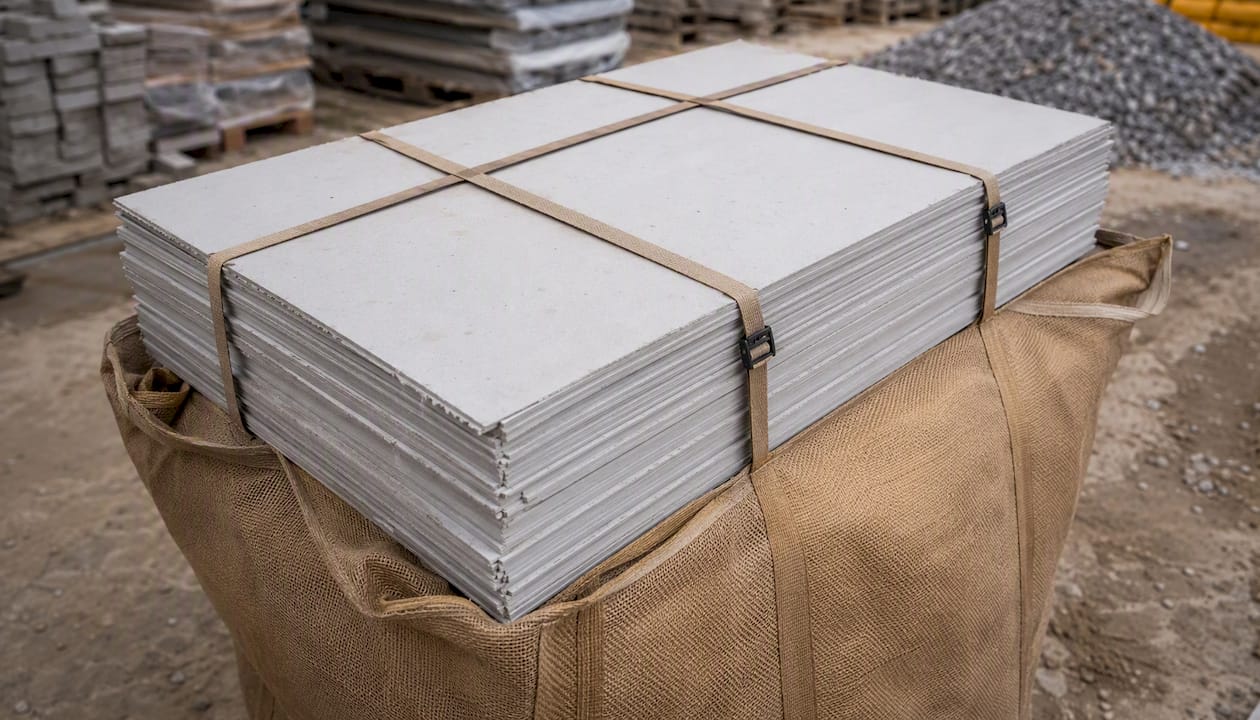
The Knauf takeback scheme, delivered with partners including Encore Environment, co-ordinates bulk bag and skip collections from construction sites and provides BREEAM-compatible project reporting. British Gypsum and Siniat run comparable programmes.
Steps to use a manufacturer scheme:
- Register your site with the manufacturer's scheme (British Gypsum, Knauf, or Siniat).
- Fill the supplied bulk bags with clean, segregated plasterboard only.
- Schedule a collection to coincide with your next delivery or via the scheme's recycling partner.
- Receive a recycling certificate or written confirmation for your project file.
Pro Tip: Ask the scheme coordinator whether they can provide project diversion data — Knauf's Encore Environment partnership offers waste audits and social-value reporting, which counts towards BREEAM credits.
Can independent recyclers collect plasterboard near you?
Independent gypsum recyclers accept segregated plasterboard and can serve areas where manufacturer schemes are impractical — useful for smaller contractors, mixed-brand sites, or one-off domestic projects.
Collection units vary: bulk bags (typically 1-tonne capacity), cages, or segregated skips. Most recyclers set a minimum volume, so confirm this before booking. Lead times range from next-day to a week depending on location and demand.
- Verify the recycler holds a current Environment Agency waste management licence.
- Request a recycling certificate or written confirmation that material was recycled — not just collected.
- Ask where the gypsum goes: reputable recyclers return it to board manufacturers, closing the loop.
Pro Tip: A recycling certificate is not the same as a waste transfer note. You need both: the WTN proves lawful transfer; the certificate proves the material was actually recycled.
Using EA-licensed carriers, skips, or a marketplace like Binshare
An Environment Agency-licensed carrier is a legal way to move plasterboard when you cannot use a manufacturer scheme or recycler directly. The key is verifying the carrier before you hand over any waste.
Checklist — what to confirm before booking a carrier:
- Valid EA waste carrier registration (check the Environment Agency public register).
- Written confirmation of the waste's destination facility.
- Commitment to provide a waste transfer note at collection.
- Ability to supply a recycling certificate or proof of destination.
What to ask when comparing carriers:
- Is the destination facility authorised to accept high-sulphate waste?
- Will you issue a waste transfer note at the point of collection?
- Can you provide a recycling certificate after processing?
- Do you accept plasterboard in bulk bags, loose, or segregated skips?
- What is your lead time from booking to collection?
Pro Tip: Never hand plasterboard to a carrier who cannot confirm the destination facility in writing. "We'll sort it" is not a duty-of-care record.
How to prepare plasterboard on site for collection
Plasterboard must be dry, uncontaminated, and separated from all other waste before collection. Contamination — wood, metal, tiles, and wallpaper — is the most common reason facilities reject a load.
- Strip all wallpaper and adhesive from board faces.
- Remove metal screws, nails, and fixings.
- Detach any timber battens or wooden frames.
- Break oversized boards down to fit bulk bags flat, without folding.
- Pack into clearly labelled bulk bags or a dedicated segregated skip — never mixed with rubble or timber.
- Photograph each bag or skip before sealing or closing.
What does plasterboard disposal cost in the UK?
Recycling is almost always cheaper than landfill once transport and mono-cell surcharges are factored in.
The Plasterboard Sustainability Partnership cites a concrete example: sending one skip of waste plasterboard to landfill costs approximately £2,000. Using a manufacturer's collection scheme or a gypsum recycling centre can save money on each skip.
Relative costs by route:
- Manufacturer takeback — lowest cost for trade sites; often included or subsidised within the supply relationship.
- Independent recycler — moderate cost; bulk bag collection typically cheaper than skip hire to landfill.
- EA-licensed carrier to recycling facility — variable; competitive quotes via a marketplace reduce cost.
- Mono-cell landfill — highest cost and rising; the growing gap between landfill and recycling costs makes recycling progressively more economical.
For small household volumes, Bradford Council notes that HWRC charges may apply per tonne or impose minimum fees for plasterboard, often the cheapest option for a few sheets.
What paperwork do you need for plasterboard disposal?
You have a legal duty of care to ensure plasterboard reaches an authorised facility and to keep a waste transfer note or digital receipt as proof.
- Waste transfer note (WTN) — issued at collection; keep for a minimum of two years.
- Carrier registration check — confirm the carrier's EA licence number before collection day.
- Recycling certificate — written proof the material was recycled, not just collected.
- Photographs — visual record of the load condition and labelling.
- Collection receipts — payment and booking confirmation for the project file.
Pro Tip: Store all paperwork digitally as well as on paper. If an enforcement query arises months later, a PDF folder is faster to produce than a box of receipts.
How do you choose the right disposal route?
Choose the route that matches your volume, location, and need for compliance proof — then verify credentials before booking.
Decision checklist:
- Estimate your volume: a few sheets points to HWRC; a skip or more points to a scheme or licensed carrier.
- Check whether your plasterboard supplier runs a takeback scheme.
- Get at least two to three quotes and compare total cost including transport.
- Confirm the carrier or recycler holds a current EA licence.
- Verify the destination facility is authorised for high-sulphate waste.
Questions to ask any provider:
- Where exactly will the waste be taken, and is that facility licensed for plasterboard?
- Can you provide a recycling certificate after processing?
- Do you accept loads with minor contamination, or must boards be perfectly clean?
- What is your lead time from booking to collection?
Step-by-step workflow for a compliant collection
A five-step process covers everything from site preparation to keeping proof of recycling.
- Prepare and segregate — strip contaminants, keep boards dry, pack into labelled bulk bags or a dedicated skip.
- Photograph and estimate — photograph the load and estimate weight or volume for accurate quotes.
- Request quotes — get two to three quotes from manufacturer schemes, independent recyclers, or verified carriers via a marketplace.
- Verify the provider — confirm EA licence, destination facility, and willingness to issue a WTN and recycling certificate.
- Keep paperwork — file the WTN, recycling certificate, photographs, and payment receipt immediately after collection.
Documentation to receive at collection:
- Signed waste transfer note with carrier registration number.
- Written confirmation of destination facility.
- Recycling certificate (may follow within a few days of processing).
Pro Tip: Book collection before the skip is full. A last-minute call often means a longer wait and a higher price — plan the collection date when you plan the strip-out.
What is mono-cell landfill and when is it used?
A mono-cell is a dedicated landfill cell engineered specifically for high-sulphate waste, isolated from biodegradable material to prevent hydrogen sulphide generation. It is the only lawful landfill option for plasterboard in the UK — and it is the last resort, not the default.
- Mono-cell is appropriate only when plasterboard is too contaminated to recycle or when no recycling route is accessible.
- Costs are significantly higher than recycling and are rising as landfill tax increases.
- Carriers must confirm the destination cell is specifically licensed for high-sulphate waste — a general landfill site will not do.
The enforcement risk is real: disposing of plasterboard in an unlicensed cell or mixed with general waste exposes both the waste producer and the carrier to Environment Agency action.
A practitioner's note on what actually gets loads rejected
The most avoidable disposal problem on UK sites is contamination. A bulk bag that looks mostly clean but contains a few strips of wallpaper or a handful of screws will be rejected at the gate — and you pay for the collection regardless.
- Plaster skim attached to the board face is generally acceptable; thick render or ceramic tile adhesive is not.
- Wallpaper — even a small amount — is a common rejection trigger. Strip it before bagging.
- Label every bag with "clean segregated plasterboard only" and the site address. Unlabelled bags raise immediate suspicion at recycling facilities.
- Photograph bags before sealing and keep the image with your waste transfer note.
Binshare makes compliant plasterboard removal straightforward
Booking a verified, EA-compliant carrier for plasterboard removal is faster when you are not making cold calls to check licence numbers yourself. Binshare connects you directly to licensed waste carriers, lets you upload a photo of your load for accurate quoting, and delivers competitive bids so you are not paying over the odds.
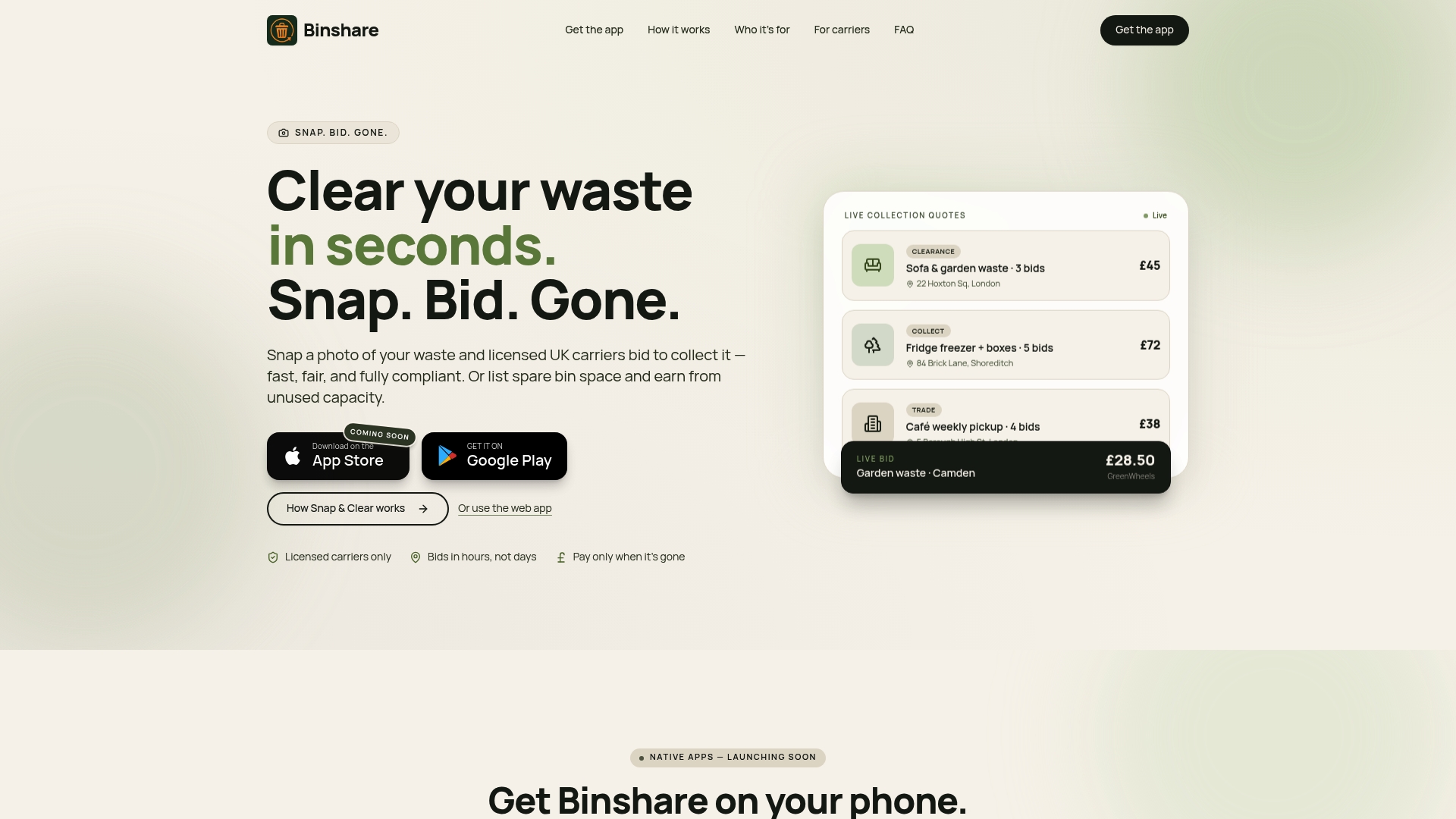
Every carrier on the platform is verified against the Environment Agency register. Payment happens after collection, and you receive a digital duty-of-care receipt automatically — no chasing paperwork. For plasterboard specifically, ask your matched carrier at booking to confirm the destination facility is authorised for high-sulphate waste and to provide a recycling certificate after processing. That one step, done through Binshare's in-app messaging, gives you the full compliance paper trail your project file needs.
Book a compliant collection on Binshare and get your first quotes within minutes.
Sources
- Recycling - Plasterboard Sustainability Partnership
- Knauf Plasterboard Take Back Scheme | Knauf
- Plasterboard / plaster | Staffordshire County Council
- Disposing of plaster and plasterboard products at household waste recycling centres | Bradford Council
This article is general information, not a substitute for advice from a qualified lawyer. Consult a qualified legal professional about your own circumstances before acting on anything here.