
You can confirm a UK waste carrier's legal status within minutes, using the official public registers and the carrier's registration number. That's the whole job. No paperwork, no phone calls to head office, just a name or number typed into the right government tool.
Here's the quick version:
- Go to the Environment Agency's public register if the collection happens in England, Natural Resources Wales for Wales, or SEPA's waste carrier pages for Scotland.
- Search using the business name, registration number, or postcode.
- Check the status shows "current" and note the expiry date.
- Save a screenshot or PDF of that result before you book anything.
Pro Tip: Do the check before the carrier turns up, not after. If they hesitate when you ask for their registration number, treat that as your answer.
Key Takeaways
Checking a UK waste carrier's registration takes minutes on an official register, and keeping proof of that check is what protects you if the waste is later fly-tipped.
| Point | Details |
|---|---|
| Use the right register | England: Environment Agency; Wales: Natural Resources Wales; Scotland: SEPA. |
| Search three ways | Business name, registration number, or postcode all work on the public registers. |
| Check the tier | Third-party collectors need Upper Tier registration, not Lower Tier. |
| Keep evidence | Screenshot the register entry and keep any digital waste transfer note. |
| Book verified carriers | Binshare only lists registered carriers and issues automatic digital transfer receipts. |
Table of Contents
- What is a waste carrier licence and how do you check waste carrier licence details?
- Why this check protects you under Duty of Care
- How Binshare builds the check into every booking
- Where to check and read further
- Sources
What is a waste carrier licence and how do you check waste carrier licence details?
A waste carrier licence, more accurately called waste carrier registration, is the legal authorisation a business or individual needs to transport controlled waste in the UK. There's no physical card or certificate posted out. It's an entry on a public database, and that's precisely why checking it takes minutes rather than days.
Registration numbers follow recognisable patterns depending on which nation issued them. In England, most begin with a series indicating Carrier, Broker, Dealer, Upper tier. Lower tier registrations (for businesses that only carry their own waste) have a different pattern and appear in a separate part of the register. Wales and Scotland use their own numbering conventions, though the same principle applies: Natural Resources Wales lets you search by registration number, business name, address, operator type or registration tier, so you don't need to know the exact format to find a match.
Registration tier matters more than most people realise. A skip hire firm or a general waste collector handling other people's rubbish should hold an Upper Tier registration. If someone offering to clear your garden waste or take away a builder's skip claims Lower Tier status, that's worth questioning. Lower Tier exists for businesses disposing of their own operational waste, not for anyone collecting from third parties. A public register entry will also show the activity type and current expiry date, which is exactly what you screenshot as your evidence.
Why this check protects you under Duty of Care
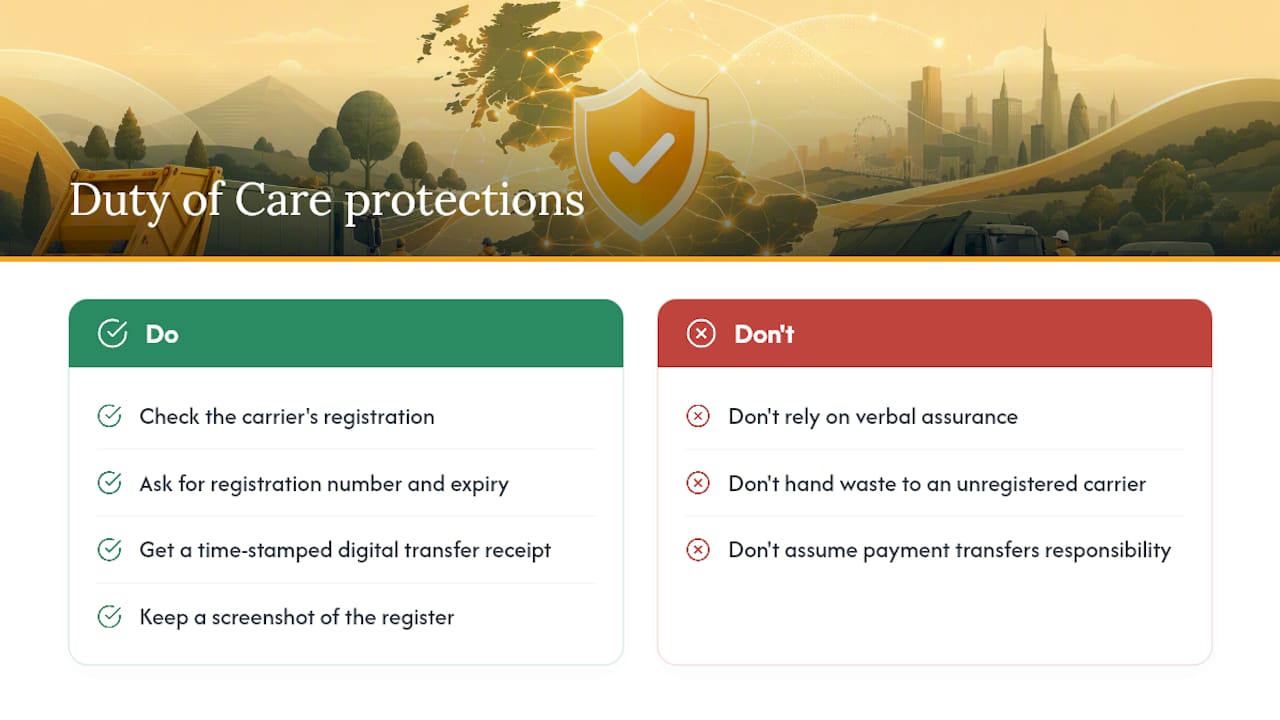
Handing waste to an unregistered carrier isn't just risky, it's an offence. The Waste Duty of Care code of practice makes the waste producer responsible for checking, and that responsibility doesn't transfer just because you paid someone to take the problem away. Prosecution under section 5 of the Control of Pollution (Amendment) Act 1989 is a real possibility if your waste ends up fly-tipped.
From April 2026, SEPA has shifted its preferred terminology to "transporter" rather than "carrier" in Scotland, though registered transporters must still hand over a registration number and expiry date on request. In practice, I'd trust a digital, time-stamped transfer receipt over a verbal assurance every time. Keep it, along with your register screenshot.
How Binshare builds the check into every booking
There's a simpler route than juggling three separate government registers and hoping you saved the screenshot. Binshare only lists carriers who've already cleared registration checks, so the verification most people do manually happens before a job ever appears in the app.
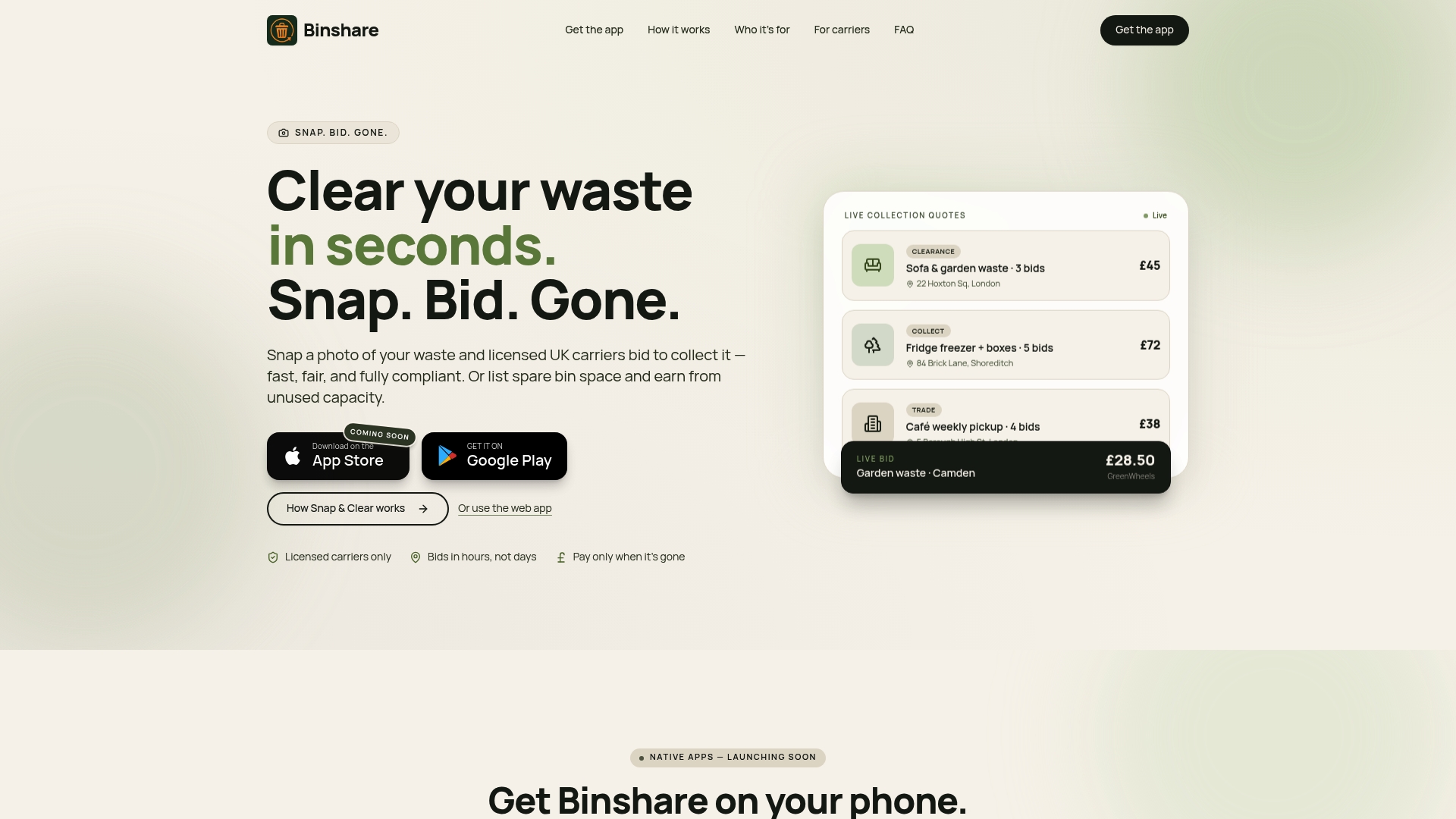
Every carrier profile on Binshare shows their registration number and status upfront, and once a job's booked, the platform generates an automated, time-stamped Duty of Care receipt rather than leaving you to chase a paper transfer note. That receipt is the kind of digital record the Environment Agency has flagged as a major step forward for traceability, and it lives in your account rather than a folder you might lose. Payment happens securely through the app after collection, so there's no cash-in-hand ambiguity either. If you'd rather book a verified carrier than run three separate register searches, start at Binshare.
Where to check and read further
- Environment Agency public register — search by name, number or postcode (England).
- Natural Resources Wales check page — same idea, Welsh carriers.
- SEPA waste carrier information — Scottish transporters, updated terminology.
- Waste Duty of Care code of practice — your legal obligations explained.
Save a screenshot or PDF of whichever register entry you check. It's the single easiest piece of evidence to produce later.
This article is general information, not a substitute for advice from a qualified lawyer. Consult a qualified legal professional about your own circumstances before acting on anything here.
Sources
- Gov
- Register of Waste Carriers, Brokers and Dealers
- SEPA: Waste carrier information
- Natural Resources Wales / Check a waste carrier
- Digital waste tracking goes live — Environment Agency blog