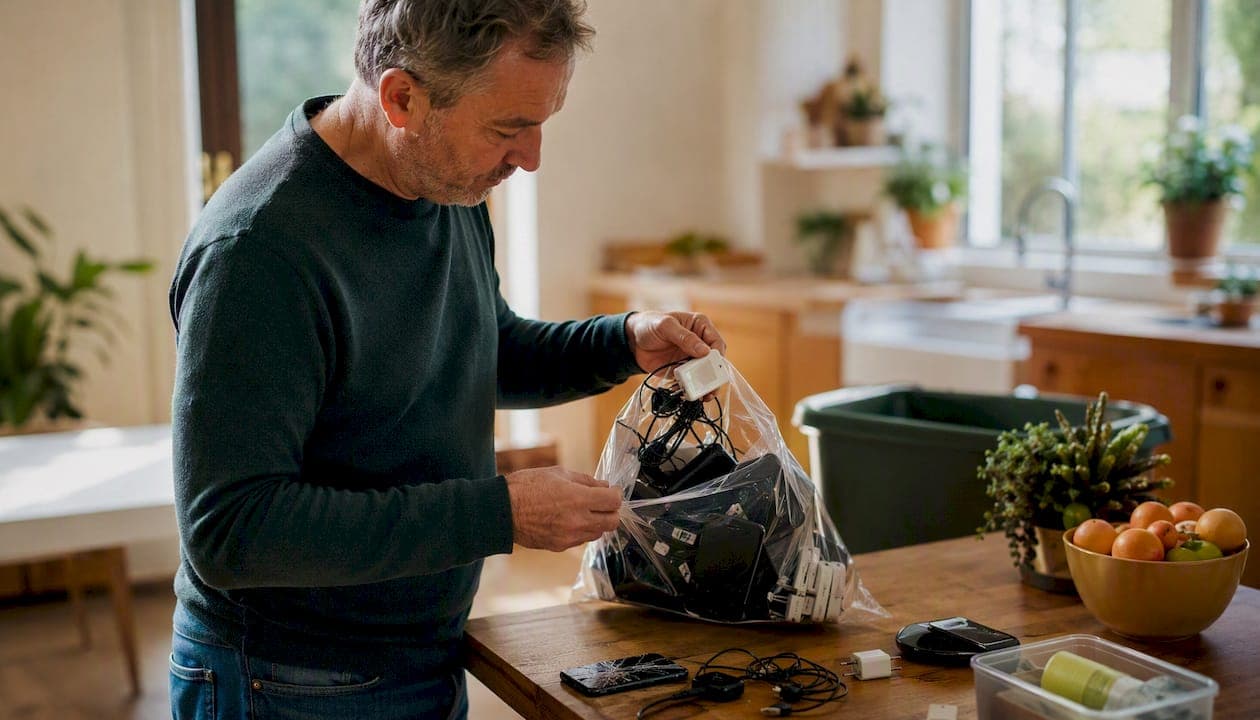
Households should take WEEE to a retailer takeback point, or use the Recycle Your Electricals locator to find one of a very large number of UK drop-off locations. Businesses must go further: appoint an authorised waste carrier, hand WEEE to an approved treatment facility (AATF), and keep duty-of-care records. The two key regulators are Defra and the Environment Agency; Valpak administers the Distributor Takeback Scheme (DTS) and DCF registration.
Quick routes at a glance:
- Householders: retailer takeback (free for small items under 25 cm) or nearest DCF via the Recycle Your Electricals locator
- Businesses: licensed carrier + AATF + waste transfer note retained for audit
- Batteries: never in general waste; separate and take to a designated battery collection point
Key takeaways
Lawful WEEE disposal in the UK requires using authorised routes, whether that is a retailer takeback point for householders or a licensed carrier with an AATF for businesses, and keeping the paperwork to prove it.
| Point | Details |
|---|---|
| Retailer takeback is free | Retailers with a sales area greater than 400 m² must accept small WEEE (items under 25 cm on their longest side) from private household customers free of charge. |
| Businesses need authorised carriers | Use only Environment Agency-registered carriers and retain waste transfer notes for at least two years. |
| Batteries are a fire risk | Separate batteries from all other waste; never put them in general waste or a skip. |
| Around 75% of materials are recoverable | Most electrical items contain metals and plastics that AATFs can recover and reuse. |
| Binshare simplifies compliance | Binshare connects households and businesses with verified carriers and issues digital duty-of-care receipts automatically. |
Table of Contents
- What counts as WEEE?
- How householders should dispose of WEEE
- What businesses must do to comply with WEEE regulations
- How to choose an authorised carrier and prepare WEEE for collection
- Guidance for DCFs, charities and reuse organisations
- Where to find WEEE collection near you
- What happens to WEEE after you hand it in
- Penalties and enforcement for non-compliance
- How Binshare makes compliant WEEE collection straightforward
- The compliance gap nobody talks about
- Sources
What counts as WEEE?
The WEEE Regulations 2013 (as amended) define waste electrical and electronic equipment as any device that depends on electric current or electromagnetic fields to work and has reached end of life. In practice, look for the crossed-out wheelie bin symbol on the product.
Common categories:
- Small household appliances (under 25 cm): toasters, electric toothbrushes, hair dryers, cables, chargers
- Large appliances: washing machines, fridges, dishwashers
- IT and telecoms: laptops, phones, tablets, printers
- Batteries and vapes: lithium-ion cells in phones and e-cigarettes are a particular fire risk when crushed
- Lighting: LED bulbs, fluorescent tubes
There is a legal distinction between used EEE (a working item kept in the market for reuse) and WEEE (an item that has been discarded). A working laptop donated to a charity such as the British Heart Foundation is used EEE, not waste, and different rules apply. Once an item is discarded, it becomes WEEE and the person or organisation holding it takes on waste-producer obligations.
How householders should dispose of WEEE
Most household electronic waste disposal in the UK is free if you use the right route. Follow this sequence:
- Can it still work? Donate or sell it. Charities like the British Heart Foundation accept working electricals for resale, keeping items in use and out of the waste stream.
- Is it small (under 25 cm)? Take it to any retailer with a sales area over 400 m². Under the WEEE Regulations 2013, those retailers must accept small WEEE from household customers free of charge, no purchase required.
- Larger item? The same retailers must offer free like-for-like takeback when you buy a replacement. A new washing machine in, old one out.
- No retailer nearby? Use the Recycle Your Electricals locator to find your nearest DCF or local authority recycling centre.
- Check your council. Some local authorities accept small electricals in home collections, sometimes in a clear bag alongside kerbside recycling. Arrangements vary, so check your council's guidance or the national locator.
Preparing items for drop-off: remove batteries where you can do so safely, tape over exposed terminals on loose batteries, and delete personal data from phones and tablets before handing them over. Drop-offs at local authority sites are usually same-day; retailer takeback happens at point of purchase.
Pro Tip: Bag small electricals together in a clear bag before heading to a drop-off point. Many sites have a dedicated small-electricals bin near the entrance, so you will not need to queue.
What businesses must do to comply with WEEE regulations
Every business has a legal duty of care. That is not optional language; it is a statutory obligation under UK e-waste regulations, and the Environment Agency can request evidence of compliance at any time.
The core requirements:
- Use only authorised waste carriers registered with the Environment Agency
- Ensure WEEE is delivered to an approved treatment facility (AATF) or approved exporter
- Issue and retain waste transfer notes for every collection
- Classify waste correctly as B2B or B2C: business-generated WEEE is B2B; WEEE from private households collected by a business is B2C and requires a B2C evidence note
- Retain waste transfer notes for a minimum of two years; hazardous waste consignment notes for three years
Getting the B2B/B2C classification wrong is a common audit failure. A retailer collecting old appliances from customers is handling B2C WEEE and must issue the correct evidence notes, not treat the collection as a standard commercial waste movement.
Pro Tip: Build an asset register before any collection. List serial numbers, device types and data-bearing status. It takes 20 minutes and saves hours during an Environment Agency inspection.
Valpak administers DTS registration for distributors who want to join a collective scheme rather than run their own DCF. Defra publishes guidance on when DCF registration is required.
How to choose an authorised carrier and prepare WEEE for collection
The single most important check: confirm the carrier holds a valid Environment Agency waste carrier licence before anything is collected. An unlicensed carrier creates liability for your business, not theirs.
Preparation checklist:
- Remove SIM cards and factory-reset phones and tablets
- Arrange certified data destruction for hard drives and data-bearing devices; request a certificate of destruction referencing a recognised standard such as NIST 800-88
- Tape over battery terminals on loose cells; keep lithium-ion batteries separate from other waste streams because of fire risk
- Separate WEEE into streams (IT equipment, large appliances, batteries) where the carrier or facility requires it
- Confirm the carrier will supply a waste transfer note on collection and a certificate of treatment from the AATF
Retain all paperwork for at least two years. For data-bearing devices, keep the certificate of destruction alongside the asset register.
Pro Tip: Ask for an itemised asset disposal report, not just a single certificate. If an audit ever queries a specific device, you need to trace it by serial number, not by batch.
Guidance for DCFs, charities and reuse organisations
Charities and Distributor Collection Facilities occupy a specific legal position. Under Defra's guidance on collecting used and waste EEE, items intended for reuse are not WEEE. The moment an item is discarded, it becomes WEEE and the receiving organisation becomes the waste producer.
DCFs must maintain seven segregated containers for the different household WEEE categories, follow the DCF code of practice on storage and handling, and notify Defra annually by 31 January (via Valpak) of any WEEE streams they intend to retain rather than pass to a Producer Compliance Scheme.
Practical steps for charities and DCFs:
- Assess each item on arrival: working and repairable items can be treated as used EEE; broken or end-of-life items must enter the WEEE waste stream
- Register as a DCF or AATF if you collect WEEE from the public; check with Valpak whether DTS membership is the right route
- Obtain the necessary environmental permits or exemptions before storing WEEE on site
- Be aware that local authorities may charge businesses for depositing EEE at DCF sites, even when household deposits are free
Charities that accept working electricals for resale, such as the British Heart Foundation, operate under the used-EEE rules and are not required to treat donated items as waste, provided those items are genuinely intended for reuse.
Where to find WEEE collection near you
The fastest route to a local drop-off is the Recycle Your Electricals locator, which lists nearly 30,000 UK locations. Enter your postcode and filter by item type.
Other search options:
- Your local authority's recycling pages: search "[council name] recycling centre" and check what the site accepts
- Valpak's DCF listings for registered facilities near your business
- Retailer websites: major supermarkets and electronics retailers often display takeback eligibility online
Before you go:
- Phone ahead for large appliances; some sites require booking
- Confirm opening hours and whether the site charges for business waste
- Ask what paperwork they provide on handover; a compliant site will issue a receipt or transfer note
What happens to WEEE after you hand it in
Collected WEEE goes to authorised treatment facilities where it is sorted, dismantled and processed for material recovery. Working items are often redirected to charities or refurbishers before reaching the treatment stage.
The treatment chain:
- Separation of reusable items and components
- Removal of hazardous materials, including batteries and capacitors
- Shredding and separation of metals, plastics and glass
- Responsible disposal of non-recyclable residues
Recycle Your Electricals estimates that a large share of the materials in many electrical items can be recovered and turned into new products, making WEEE one of the more resource-rich waste streams.
Producer Compliance Schemes finance the recycling of household WEEE by collecting fees from producers and paying AATFs for treatment. The AATF issues evidence notes confirming compliant treatment, which close the compliance loop for producers and distributors.
Penalties and enforcement for non-compliance
Non-compliance with WEEE duties can lead to enforcement action, fines and reputational damage. The Environment Agency monitors compliance and can request waste transfer evidence at any time.
Enforcement levers:
- Environment Agency investigations and formal notices
- Withdrawal of DCF approval for code-of-practice breaches
- Civil or criminal penalties for serious or repeated breaches
- Local authority enforcement for DCF sites within their area
Incorrectly disposing of batteries or data-bearing devices can trigger two separate regulatory consequences: an environmental breach under the WEEE Regulations and a data-protection breach under UK GDPR, both of which carry their own penalties and reputational consequences.
Reducing your risk:
- Keep waste transfer notes and certificates of destruction on file
- Use only Environment Agency-registered carriers
- Segregate batteries and hazardous items before collection
- Never put WEEE in general waste or skip it without a transfer note
How Binshare makes compliant WEEE collection straightforward
Sorting authorised carriers, verifying credentials and chasing paperwork takes time most businesses and householders do not have. Binshare connects you directly with verified, Environment Agency-registered carriers who bid competitively for your collection job, so you get a compliant service without the legwork.
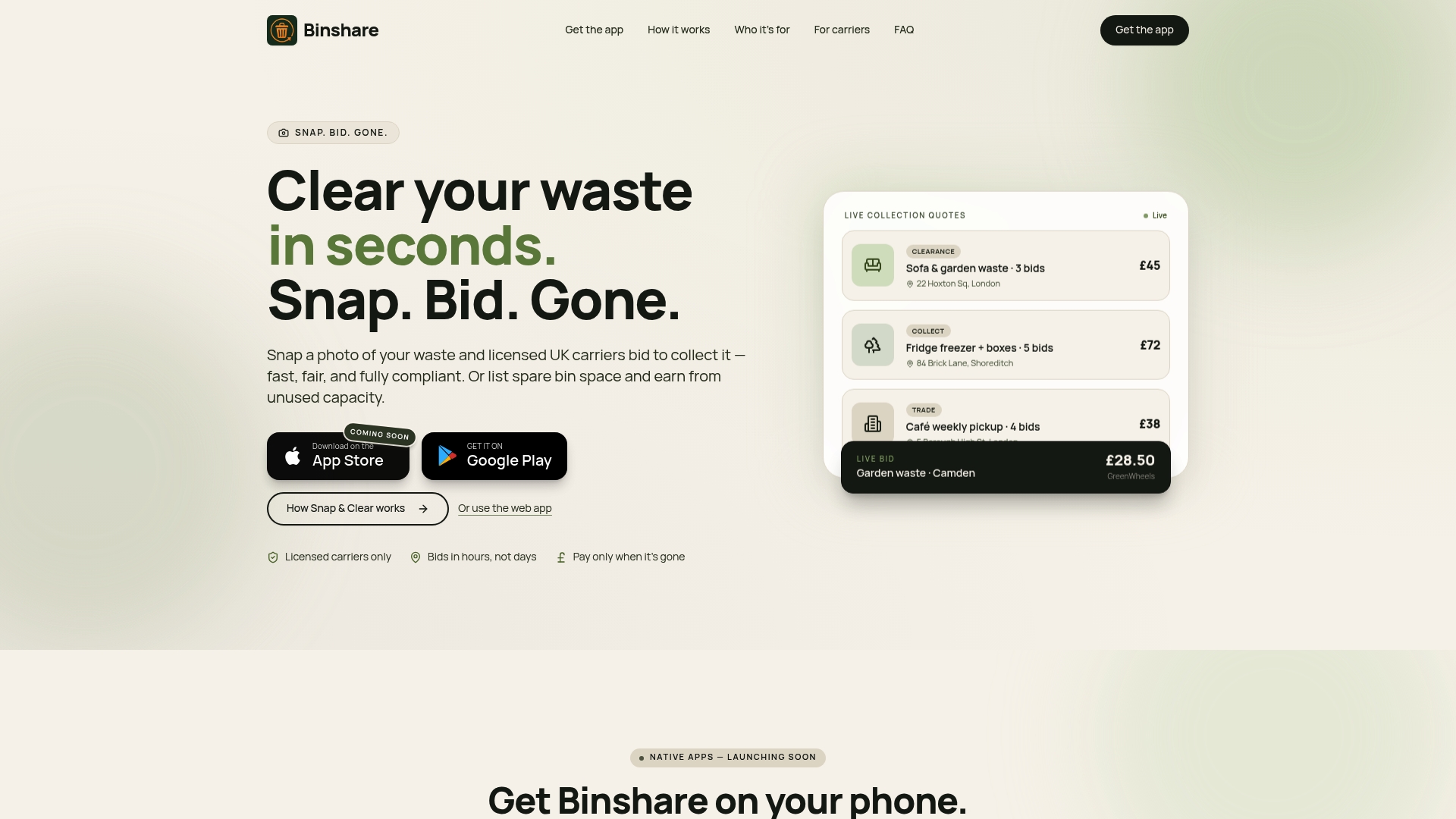
What you get through Binshare:
- Verified carrier credentials checked against Environment Agency registration
- Digital duty-of-care receipts issued automatically after collection
- In-app competitive bidding, so you are not locked into a single provider's price
- Support for data-destruction certificate requests on IT equipment collections
- Audit-ready digital records stored in the platform
Pro Tip: Snap a photo of your WEEE items in the app before the carrier arrives. It creates a timestamped record of what was collected, which strengthens your audit trail alongside the digital transfer note.
Post a collection request, receive bids from verified carriers, confirm credentials in-app, and pay securely after collection. Visit Binshare to get started.
The compliance gap nobody talks about
Most WEEE guidance focuses on where to take things. The harder problem is the gap between knowing the rules and actually following them under time pressure, which is where most enforcement cases originate.
Businesses rarely get caught because they deliberately flouted the law. They get caught because someone used an unregistered man-with-a-van to clear an office quickly, or because a carrier handed over a generic receipt instead of a proper waste transfer note, and nobody checked. The paperwork feels bureaucratic until an Environment Agency inspector asks for it.
The 400 m² retailer rule is genuinely useful for householders, yet most people have never heard of it. You can walk into a large supermarket or electronics retailer today and hand over a broken toaster, a bag of old chargers, or a dead phone, at no cost, with no purchase required. That is a legal entitlement, not a favour.
For businesses, the data-destruction piece is where the real risk concentrates. A certificate of treatment from an AATF covers environmental compliance. It does not cover what happened to the data on the hard drive before the device was shredded. Those are two separate obligations, and conflating them is a common and costly mistake.
The practical answer is to treat WEEE disposal the same way you treat any other compliance task: document it before it happens, not after.
This article is general information, not a substitute for advice from a qualified lawyer. Consult a qualified legal professional about your own circumstances before acting on anything here.