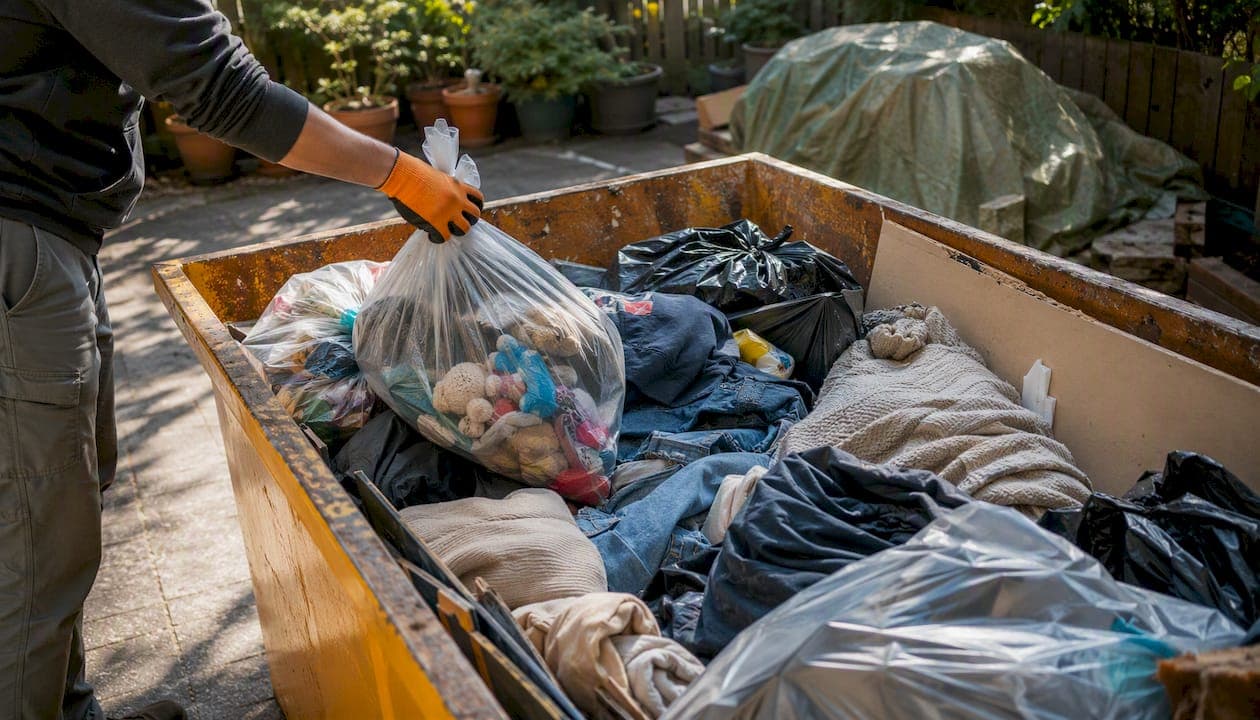
Most non-hazardous household, garden and builders' waste can go in a standard skip. Hazardous materials, electrical appliances covered by WEEE regulations, asbestos, gas cylinders and clinical waste cannot. Declare anything borderline when you book.
Three quick categories to keep in mind:
- Allowed: general household rubbish, garden waste, rubble, timber, metal, ceramics and non-electrical furniture
- Declarable (may incur extra fees): fridges, mattresses, tyres, bulk soil, plasterboard and large white goods
- Forbidden: asbestos, paints, solvents, batteries, gas cylinders, clinical waste and refrigerant-containing appliances without prior specialist handling
If you are unsure about a specific item, tell your provider at the point of booking. For anything that falls into the forbidden category, your local council's household waste recycling centre (HWRC) or a licensed specialist carrier is the lawful route.
Key takeaways
Most skip waste is straightforward: non-hazardous household, garden and builders' materials are accepted, hazardous and controlled items are not, and declaring borderline items at booking protects you legally and financially.
| Point | Details |
|---|---|
| Check what is accepted before loading | Confirm with your provider which items are allowed, declarable or prohibited before filling the skip. |
| Declare restricted items at booking | Fridges, mattresses, tyres and bulk plasterboard must be declared upfront to avoid refused collections or extra charges. |
| Keep plasterboard separate | Plasterboard must be segregated from general waste to prevent harmful gas production in landfill. |
| Use HWRCs for prohibited items | Asbestos, batteries, clinical waste and WEEE items have lawful disposal routes via your local household waste recycling centre or specialist carrier. |
| Keep your waste transfer note | Section 34 of the Environmental Protection Act 1990 requires you to retain proof of lawful disposal for at least two years. |
| Binshare connects you to verified carriers | Binshare's platform verifies carriers against the Environment Agency register and issues digital duty-of-care receipts automatically. |
Table of Contents
- What can go in a skip: accepted materials by category
- Which items need to be declared or may carry an extra charge?
- Items that absolutely cannot go in a standard skip
- What are your legal responsibilities when hiring a skip?
- What happens if you put the wrong items in a skip?
- How to load a skip safely and legally
- Where to dispose of items a skip cannot take
- Choosing the right skip size and what to expect when booking
- A note on responsible skip use
- Binshare makes verified skip hire straightforward
- Sources
What can go in a skip: accepted materials by category
The vast majority of waste from a house clearance, garden tidy-up or building project is perfectly acceptable in a standard skip. Here is how it breaks down by type.
Household waste
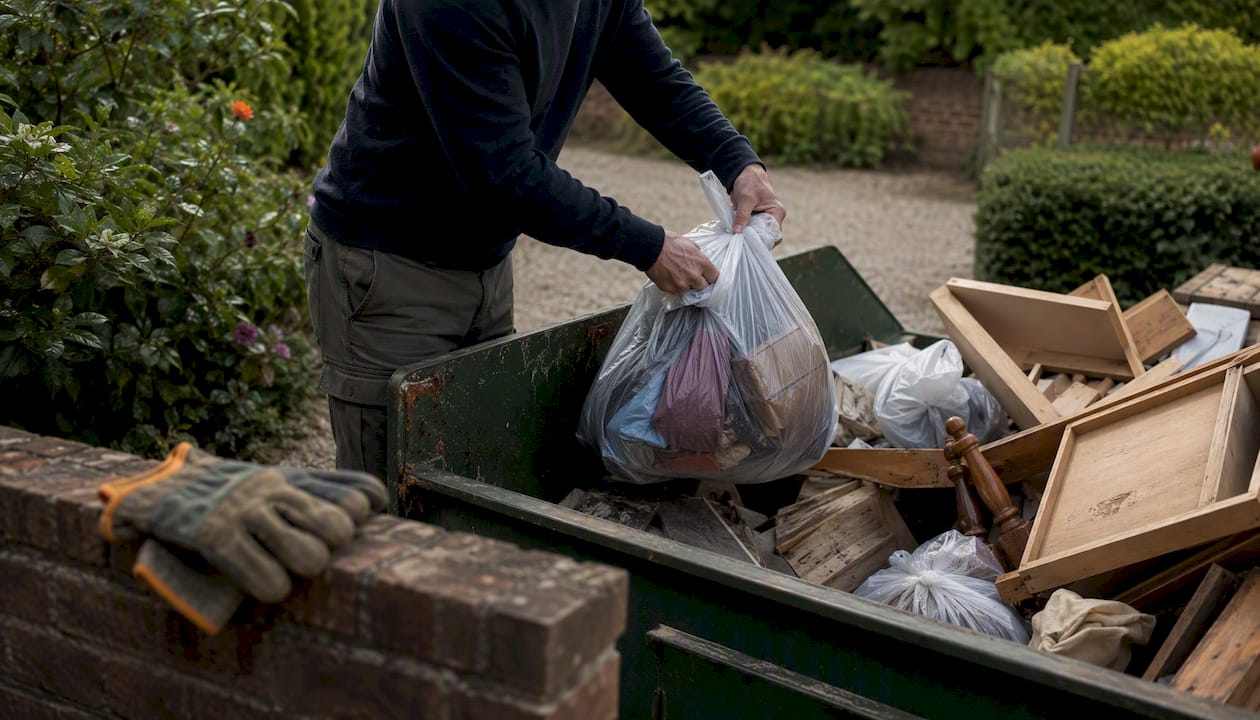
Non-electrical furniture, carpets, rugs, clothing, bagged general rubbish and broken household items that contain no hazardous components are all fine. Think sofas without built-in motors, wooden wardrobes, curtains, crockery and general clutter from a clear-out. Bag small loose items where you can; it keeps the skip tidy and makes sorting at the recycling facility faster.
Garden waste
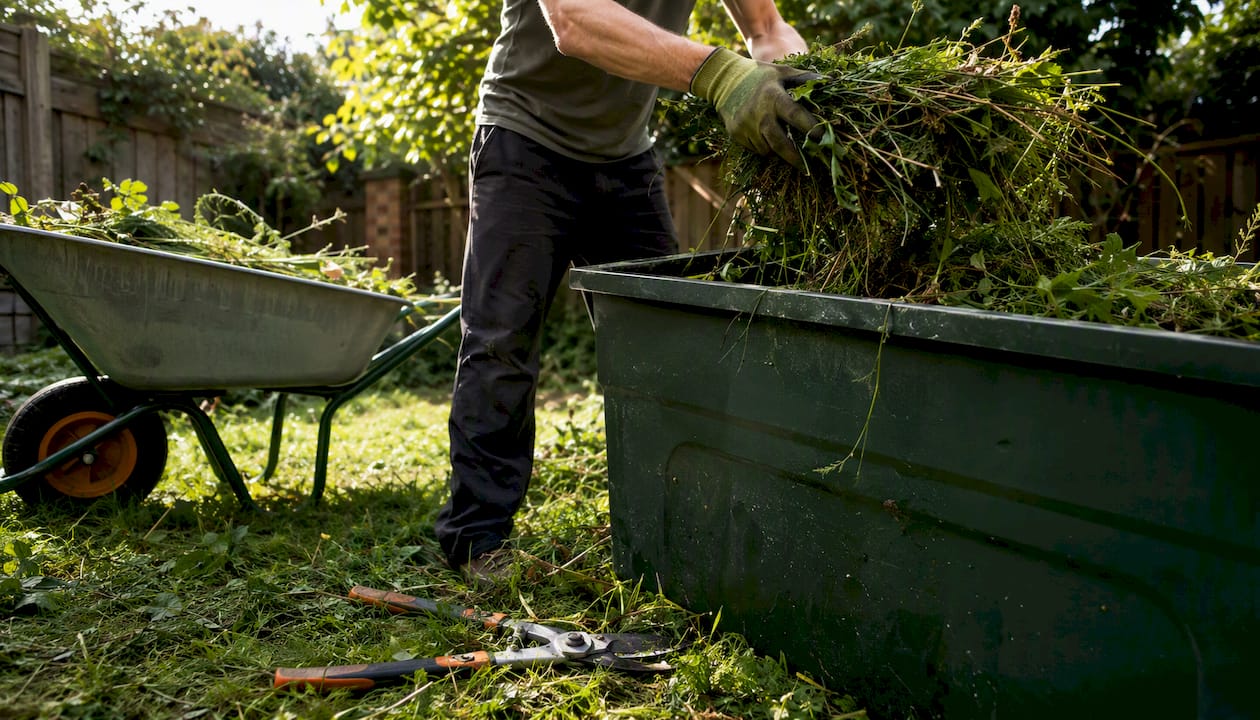
Grass cuttings, hedge trimmings, branches, leaves and small amounts of soil and turf are accepted. Soil and hardcore are heavy, so be mindful of weight limits. A skip that looks half-full of soil can easily exceed its safe load limit, which may result in a surcharge or a refusal to collect.
Builders and DIY waste
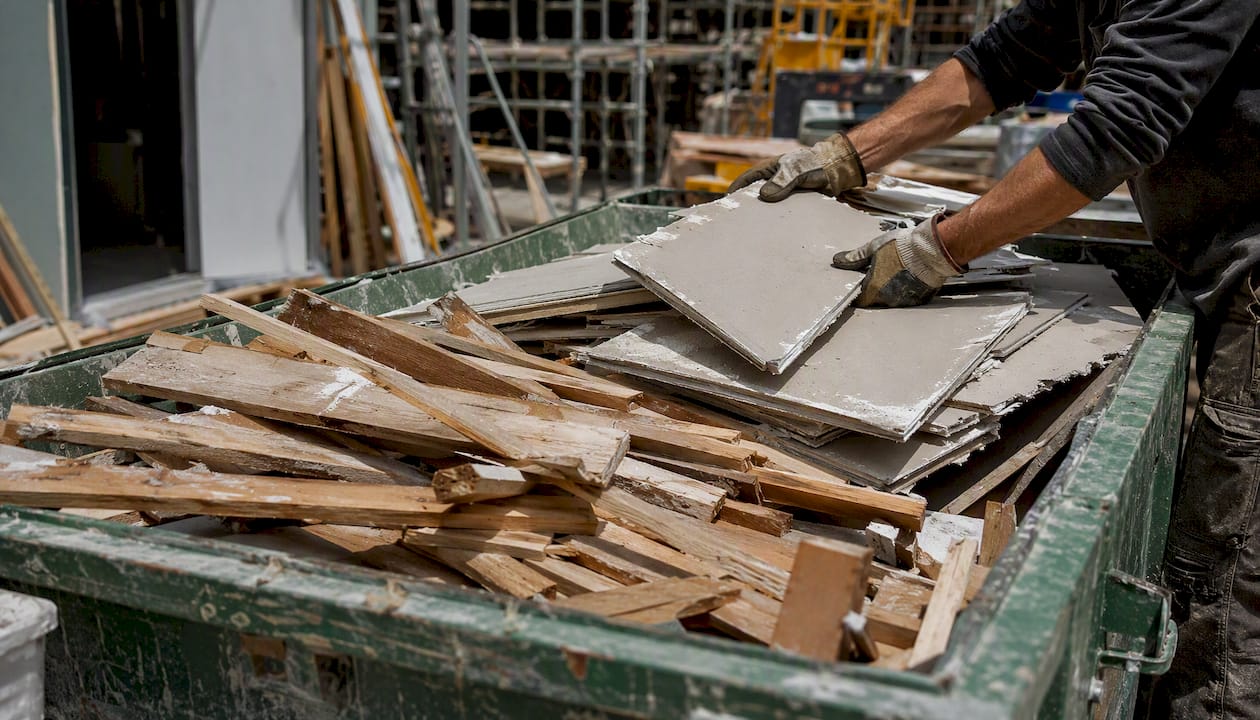
Rubble, bricks, tiles, timber, metal, ceramic sanitaryware (basins, toilets, baths) and small amounts of plasterboard all fall within the acceptable range for most skip companies. Plasterboard deserves special attention: it must normally be kept separate from other waste because it can produce harmful hydrogen sulphide gas in landfill. Many providers will accept it only in segregated loads or sealed bags, so check before you load.
Mixed loads
Most skip companies accept mixed non-hazardous waste in a single load. Segregating materials where practical, such as keeping timber away from rubble and plasterboard separate from everything else, often improves recycling rates and can reduce your final charge if the company prices by material type.
Pro Tip: Drain any liquids from items before loading. A washing-up bowl, a garden hose or a paint tray with residue can contaminate an otherwise clean load. Empty and dry items first.
Which items need to be declared or may carry an extra charge?
Some materials sit in a grey zone: skip companies can legally accept them, but only with advance notice and often at an additional cost. Declaring these at booking avoids refused collections and surprise invoices.
Common declarable items include:
- Fridges and freezers: contain refrigerants that require specialist removal under WEEE regulations before the appliance can be recycled
- Mattresses: require separate processing; most providers charge a handling fee per mattress
- Tyres: subject to specific disposal controls; accepted by some skip firms but always at an extra cost
- Bulk soil and hardcore: heavy materials that affect load weight significantly; providers typically charge by the tonne above a threshold
- Plasterboard in quantity: as noted above, segregation is often mandatory and bulk loads may attract a premium
- Large furniture items: oversized sofas, wardrobes and beds may require manual handling and affect skip capacity calculations
Extra fees for declarable items are typically calculated by weight, volume or handling complexity. The precise amount varies by provider and region, so ask for a written quote that covers these items specifically. Keep a photographic record of what you declared and when, alongside your waste transfer paperwork, as evidence of your duty of care.
Items that absolutely cannot go in a standard skip
Some materials are prohibited outright, regardless of the skip company or the size of the load. These restrictions exist because of health risks, environmental hazards or specific legal controls.
Here is what cannot go in and where it should go instead:
Asbestos and asbestos-containing materials: a serious health and legal hazard. HSE guidance is clear that asbestos must be managed and removed by licensed contractors. Never attempt DIY removal. Contact a licensed asbestos contractor for assessment, removal and disposal.
Liquid hazardous waste (paints, solvents, fuels, oils): fire and contamination risks make these unacceptable. Take them to your local HWRC, which usually has a dedicated hazardous waste bay.
Electrical appliances covered by WEEE regulations: fridges, freezers and other large white goods containing refrigerants or controlled substances cannot go in a skip without prior specialist treatment. WEEE regulations require separate handling and recycling. Use your local HWRC or a retailer takeback scheme.
Batteries: subject to separate collection rules and must not go in a general skip. Most supermarkets and electrical retailers have battery collection points.
Fluorescent tubes and energy-saving bulbs: contain mercury; take to an HWRC.
Gas cylinders: pressurised containers are a serious safety hazard. Return them to the supplier or contact a specialist disposal service.
Tyres: controlled waste with specific disposal routes. Licensed tyre retailers and HWRCs accept them.
Clinical and medical waste: syringes, dressings and similar items require specialist clinical waste collection. Contact your local NHS trust or council clinical waste service.
Persistent organic pollutants (POPs): certain older upholstered furniture may contain POPs in the foam. Gov.uk guidance requires these materials to be handled separately from general skip waste and disposed of by specialist contractors.
What are your legal responsibilities when hiring a skip?
The rules around skip hire are not just good practice. They are backed by statute, and getting them wrong can be expensive.
-
Check your carrier is registered. Ask the skip company for their Environment Agency waste carrier registration number. You can verify it on the Environment Agency public register. An unregistered carrier means you could be held liable for any illegal dumping.
-
Get a waste transfer note. Section 34 of the Environmental Protection Act 1990 requires waste producers to transfer waste only to authorised persons and to retain a written waste transfer note as proof. Keep it for at least two years.
-
Check whether you need a road permit. If the skip will sit on a public highway rather than your driveway or private land, your skip company or local council must obtain a permit. Placement without one can result in a fine for you or the provider.
-
Classify your waste correctly. Use Gov if you are unsure whether an item is hazardous. Misclassifying hazardous waste as general waste is an offence.
-
Ask these questions before you book: Is the company a registered waste carrier? Will I receive a waste transfer note? Do you accept the specific items I have, and is there an extra fee? Who is responsible for obtaining the road permit if needed?
What happens if you put the wrong items in a skip?
The consequences range from inconvenient to serious, depending on what was placed in the skip and whether it was deliberate.
At the mild end, the skip company may simply refuse to collect until the prohibited item is removed. You will pay for the wasted collection trip and any redelivery. If a contaminated load reaches the recycling facility, the entire load may be redirected to landfill or specialist treatment, at a significantly higher cost that gets passed back to you.
More seriously, the Environment Agency and local authorities have powers to investigate and prosecute waste offences. Fly-tipping and illegal disposal can result in unlimited fines and, in the most serious cases, criminal prosecution. The Environment Agency publishes enforcement outcomes publicly, so the reputational risk is real for businesses.
Pro Tip: If you discover a prohibited item while loading, stop immediately. Segregate it, photograph it in situ, and call your skip provider before continuing. Most providers will advise on the correct route and can arrange specialist collection. Acting quickly and transparently is far better than hoping nobody notices.
How to load a skip safely and legally
Loading a skip correctly is not just about fitting more in. It affects safety, collection logistics and whether your waste ends up recycled or in landfill.
-
Respect the fill line. Never load above the top of the skip's sides. An overfilled skip cannot be legally transported on public roads, and the driver is entitled to refuse collection.
-
Distribute weight evenly. Heavy items like rubble and soil should be spread across the base, not piled at one end. An unbalanced load risks tipping during transport.
-
Keep plasterboard separate. If your provider accepts it, bag it or stack it away from other materials. Mixing it with general waste can cause the entire load to be rejected.
-
Bag small loose items. Loose debris is harder to sort at the recycling facility. Bagged waste improves recycling rates and keeps the skip safer to work around.
-
Drain liquids before loading. Any item that could leak, such as a washing machine drum or a paint tin with residue, should be emptied and dried first.
-
Maintain vehicle access. The collection lorry needs clear access to the skip. Check there are no overhanging branches, parked vehicles or low cables that would prevent a safe lift.
-
Photograph the loaded skip. Take a photo before collection as part of your duty-of-care record. If a question arises later about what was in the load, you have evidence.
Where to dispose of items a skip cannot take
Every item on the prohibited list has a lawful disposal route. None of them need to end up fly-tipped.
Large electrical appliances and WEEE: take fridges, freezers, washing machines and televisions to your local HWRC. Many retailers also offer takeback when you buy a replacement, under their WEEE obligations. For large household items, councils often run bulky waste collection services.
Batteries: supermarkets, electrical retailers and many councils have battery collection points. The battery regulations place obligations on retailers to accept used batteries.
Asbestos: contact a licensed asbestos removal contractor. Never attempt removal yourself. The HSE maintains guidance on finding licensed contractors, and some councils offer limited asbestos disposal services for small domestic quantities.
Clinical waste: contact your GP surgery, local NHS trust or council for clinical waste collection. Sharps bins and dressings from home medical care have specific collection routes.
Paints, solvents and oils: most HWRCs have a hazardous waste bay. Some councils run community repaint schemes for usable leftover paint.
Tyres: licensed tyre retailers are obliged to accept old tyres when fitting new ones. HWRCs also accept a limited number per visit.
Choosing the right skip size and what to expect when booking
Getting the size right saves money and avoids a second delivery. Here is a practical guide.
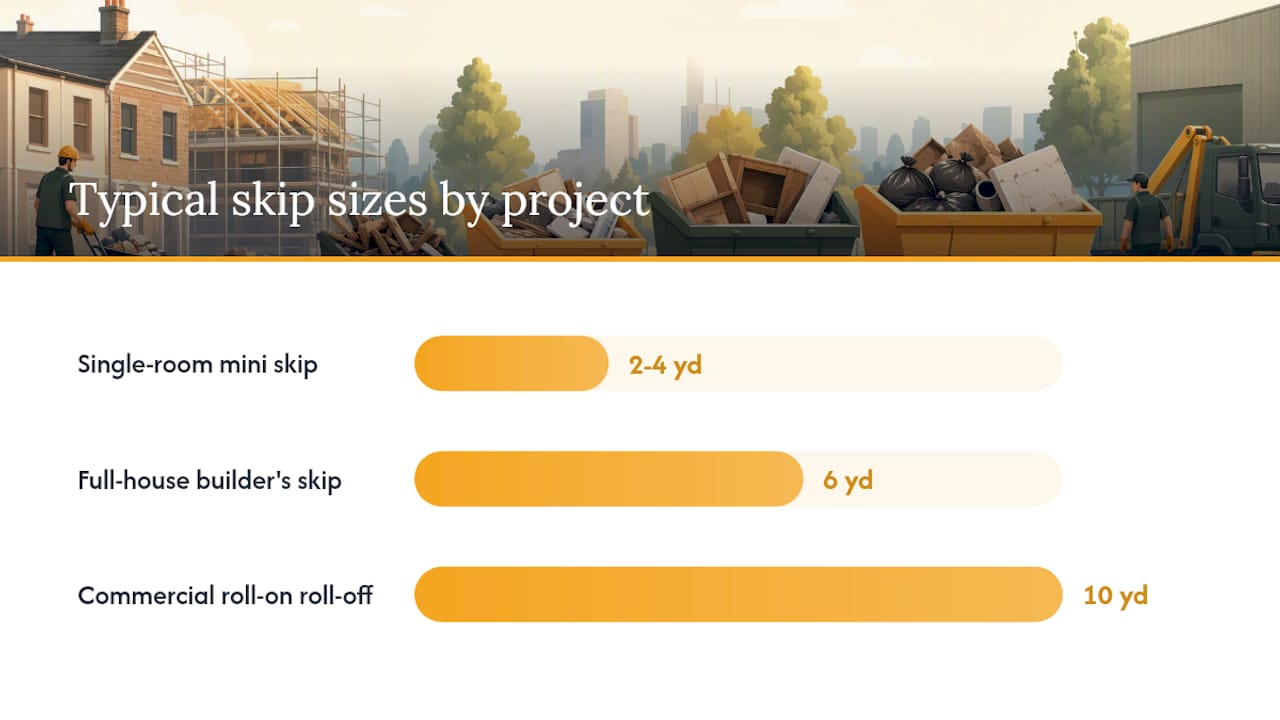
| Project type | Typical skip size | Notes |
|---|---|---|
| Single-room clear-out or small garden tidy | 2–4 yard mini skip | Good for bagged rubbish, small furniture, garden cuttings |
| Full house clear-out or kitchen/bathroom renovation | 6 yard builder's skip | Handles mixed loads including rubble and timber |
| Large renovation or commercial strip-out | 10 yard roll-on roll-off | For heavy or high-volume waste; often priced by tonne |
Pricing varies by region, skip size and the materials you are disposing of. A mini skip for general household waste typically costs less than a builder's skip loaded with rubble or plasterboard, which carries weight surcharges. Declarable items such as mattresses, tyres and fridges will add to the base price. Always ask for an itemised quote.
When booking, tell your provider:
- The type and approximate volume of waste
- Whether any declarable or potentially hazardous items are included
- Access details (narrow driveway, low bridge, parking restrictions)
- Whether the skip will be on the public highway (permit needed)
- How long you need the skip
Expect to receive a waste transfer note at or before collection. If the company cannot provide one, that is a red flag about their registration status.
A note on responsible skip use
The rules around skip hire can feel like bureaucracy, but they exist for straightforward reasons: hazardous materials cause real harm when they reach landfill or contaminate recycling streams, and the duty-of-care framework ensures someone is always accountable for waste from source to disposal.
Carrier verification and proper paperwork are not optional extras. They are the practical mechanism by which householders and businesses meet their legal obligations, and they protect you if a question ever arises about where your waste ended up. There are lawful options for virtually every type of waste, including the most difficult items. The challenge is usually knowing where to look, not a lack of routes.
Binshare makes verified skip hire straightforward
Booking a skip through Binshare means every carrier you receive a bid from is verified against the Environment Agency's waste carrier register before they can operate on the platform. You photograph your waste, describe what you have (including any declarable items), and licensed carriers bid competitively for the job.
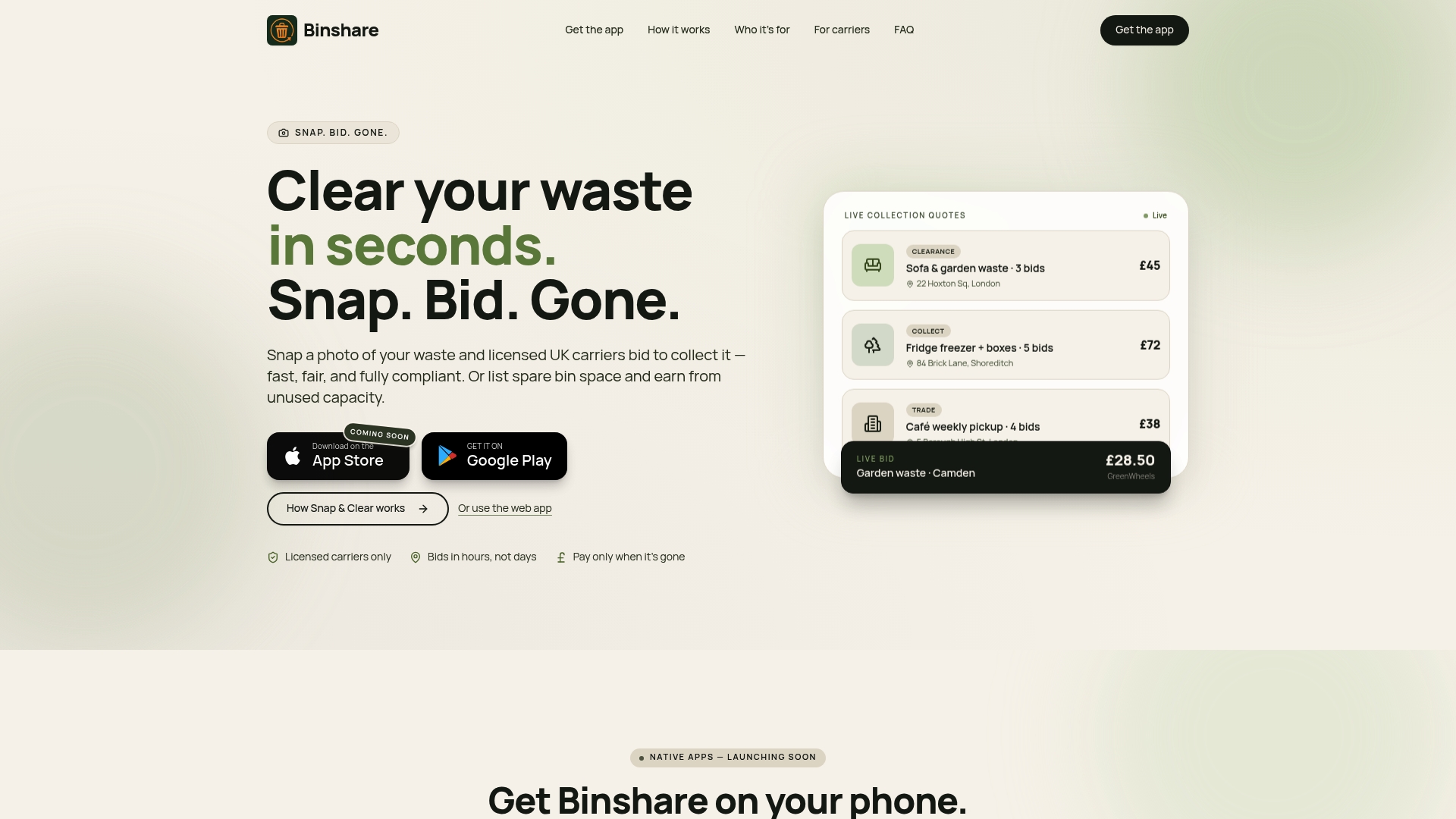
Digital duty-of-care receipts are issued automatically after collection, so your waste transfer paperwork is handled without chasing. For restricted items, the booking flow lets you declare them upfront, so carriers who can lawfully handle them respond with accurate quotes. No guesswork, no surprise fees, and no risk of an unregistered carrier leaving you liable. Visit Binshare to post your waste job and get competitive bids from verified carriers today.
Sources
These official UK sources back the guidance in this article and are worth bookmarking if you need to go deeper on any specific area.
Gov.uk: manage waste containing persistent organic pollutants (POPs) — explains which materials (including some older upholstered furniture) contain POPs and require specialist disposal rather than a standard skip.
HSE: asbestos introduction — covers why asbestos is hazardous, where it is commonly found in buildings and why licensed contractors must handle it.
Gov.uk: WEEE regulations — sets out the legal framework for electrical and electronic equipment disposal, including retailer takeback obligations.
Legislation.gov.uk: Environmental Protection Act 1990, Section 34 — the statutory duty-of-care provision that governs waste transfer and carrier authorisation for all waste producers.
Gov.uk: collection of large waste items — practical guidance on council bulky waste collections and HWRC options for large household items.
Gov.uk: how to classify different types of waste — useful if you are unsure whether a specific item counts as hazardous or controlled waste.
Gov.uk: batteries and waste batteries regulations — explains why batteries cannot go in general skips and what the correct disposal routes are.
Gov.uk: request clinical waste collection — the starting point for householders managing medical waste at home who need a specialist collection.